Use last Christmas to plan your next family celebration
Keep last Christmas’s memories separate from your next plan. A two-season sheet helps you reuse ideas while checking dates, places and arrangements anew.
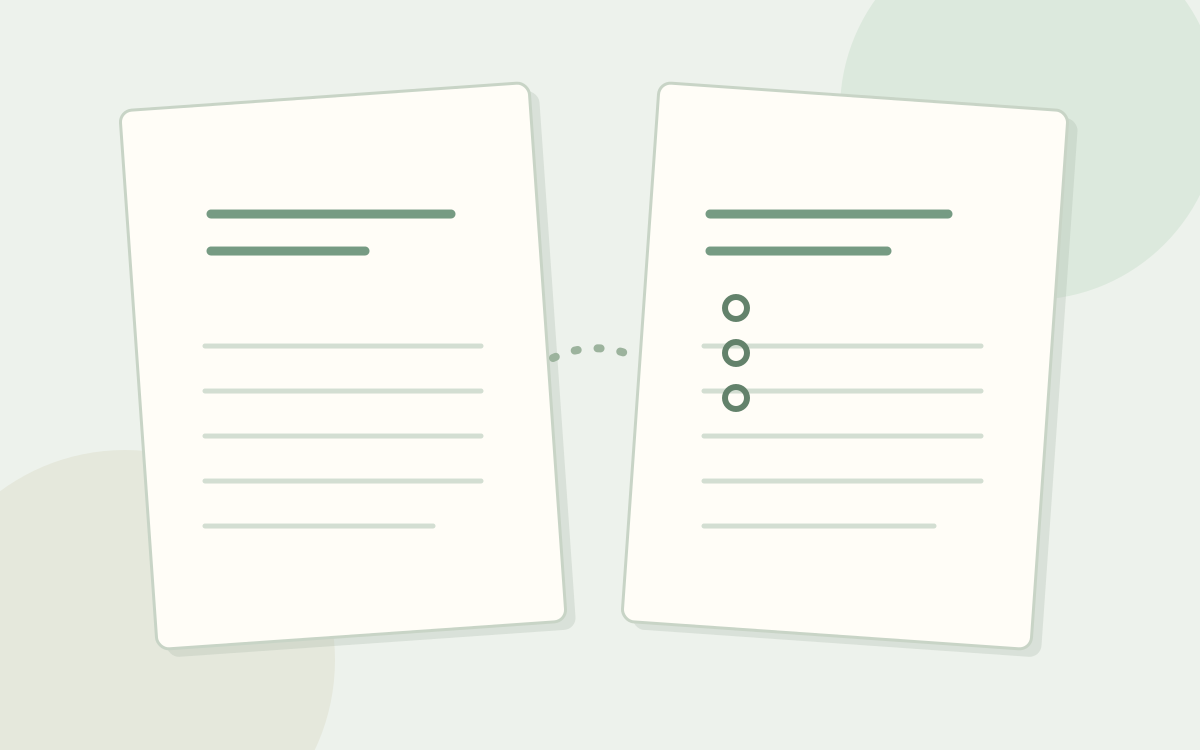
Last Christmas may hold an idea worth using again. Keep the old record intact and open a separate page for the next celebration. An idea can travel across years without bringing last year’s timetable or guest list with it.
Use paper or a private document; no account is needed. The printable two-season reset sheet has a past record and a fresh planning section. A text version is below.
Record what you know
Head a separate record “Last celebration” and add the year. Read your existing notes without editing them. Mark each item **happened** when someone can confirm it, **proposed** when it was only an idea, or **uncertain** when the note or recollections are unclear. A calendar entry alone does not show that an event happened. It is fine to leave a question open.
Choose a meal, quiet moment or tradition you would like to remember. Note where the original is kept. Keep paper originals if you photograph or scan them. The US National Archives’ digitising guidance advises retaining originals and details that identify the copies. Do not alter “we read together after dinner” just because the next celebration may look different.
Open a fresh plan
On another sheet, write “Next celebration” and the year. For each borrowed idea, mark **keep**, **change**, **leave behind** or **decide later**. Check the local date and time, place and who may join you. Ask about changed availability, preferences, travel, energy, budget and space. Give each open question to an adult to confirm and set a date to revisit it. For celebrations in more than one place or on different days, write the local details for each part.
A fictional example
**Last celebration, 2025:** “We made paper stars at home on 23 December” is a confirmed memory. “Invite cousins for dinner” is only proposed; nobody can confirm the dinner took place. Both remain in the 2025 record.
**Next celebration, 2026:** Paper stars may work again, but time and place are open. A parent writes, “Ask the household by 15 November whether a short craft afternoon would suit us.” This is a question, not a confirmed invitation. The memory stays unchanged.
Blank sheet and plain-text version
Print the blank two-season reset sheet. Keep it private unless those involved agree to share it. The fictional example is separate from the blank form.
For plain text, make two notes. **Last celebration:** year and location of originals; what happened, was proposed or remains uncertain; an unchanged memory; an idea to consider again. **Next celebration:** year, local date and time, place and people to check; changed preferences and limits; keep, change, leave behind or decide later; a new question, confirming adult or role and review date; status (open, confirmed, changed or dropped); private storage and who, if anyone, may see it.
Put the record somewhere findable
Label the old folder or envelope with its year. Keep it dry and away from likely water or heat exposure. The US National Archives’ storage guidance warns about damp basements and hot attics. Give digital copies clear names and a backup, while keeping paper originals, as its digitising guidance advises. You can return to open decisions later.
 22
22 23
23 24
24