Build a three-stage Christmas chain reaction and check each handoff
One small action can trigger the next: a falling card nudges a paper ball, the ball rolls down a short channel and touches a folded greeting. The fun is working out the connections. Start with three stages on a clear table, not a long arrangement that fails somewhere you cannot identify.
Use light paper or card, a strip of cardboard, tape and a ball you form from paper large enough for the participants. An adult should choose suitable materials and supervise the setup. Keep the activity away from table edges and do not use flames, electrical devices, sharp objects or heavy falling pieces.
Give each stage one job
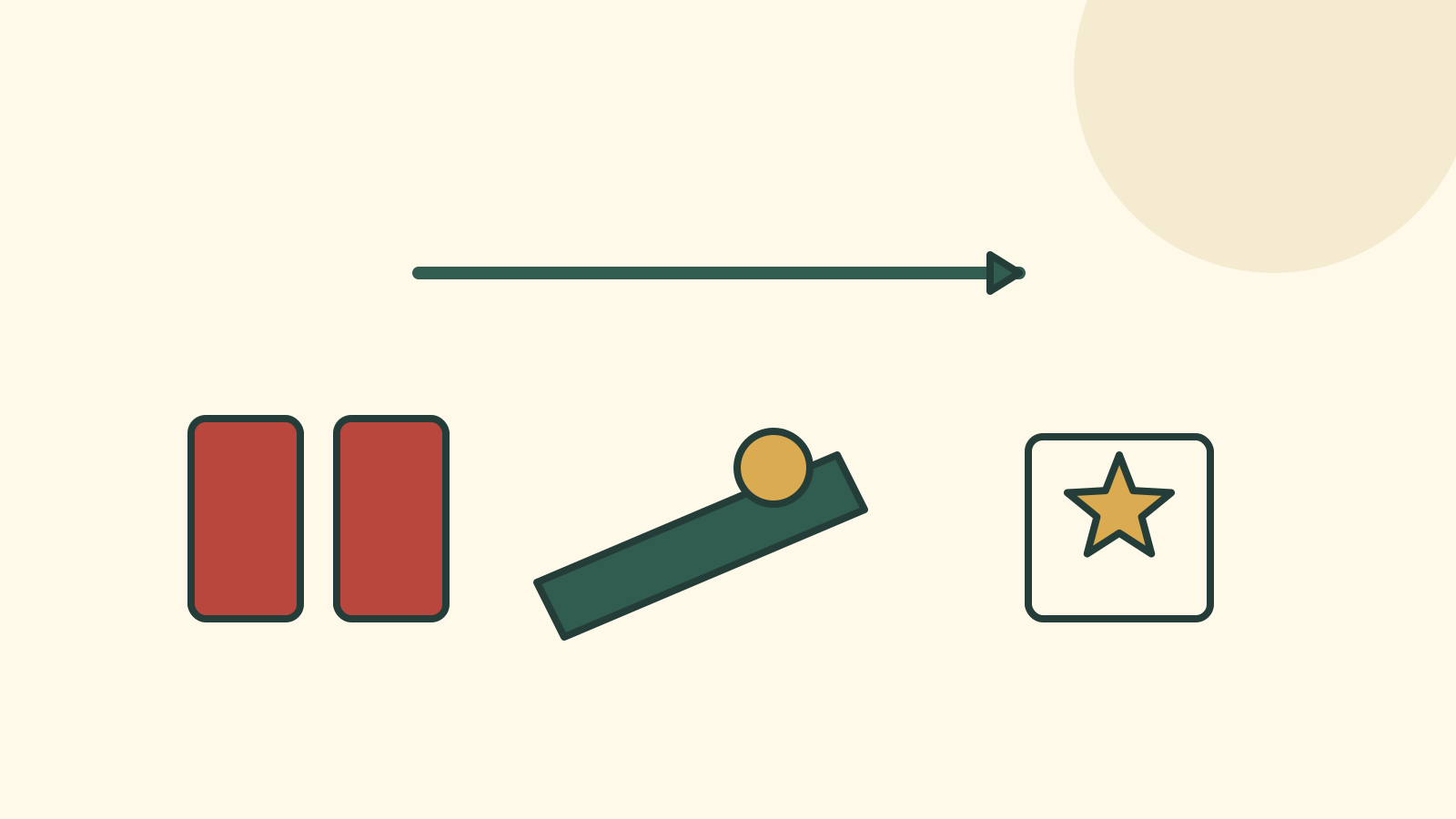
Fold a strip of cardboard into a shallow U-shaped channel: a flat middle with raised sides that keep the ball on its path. Rest one end on a low folded-card support to make a gentle slope. Tape the support to the base and tape the outside of the channel to it, leaving the ball’s path clear. Make a card stand loosely on its edge at the top of the channel. Place the paper ball where the card can gently nudge it. At the channel’s lower end, position a light folded card so the ball can touch it.
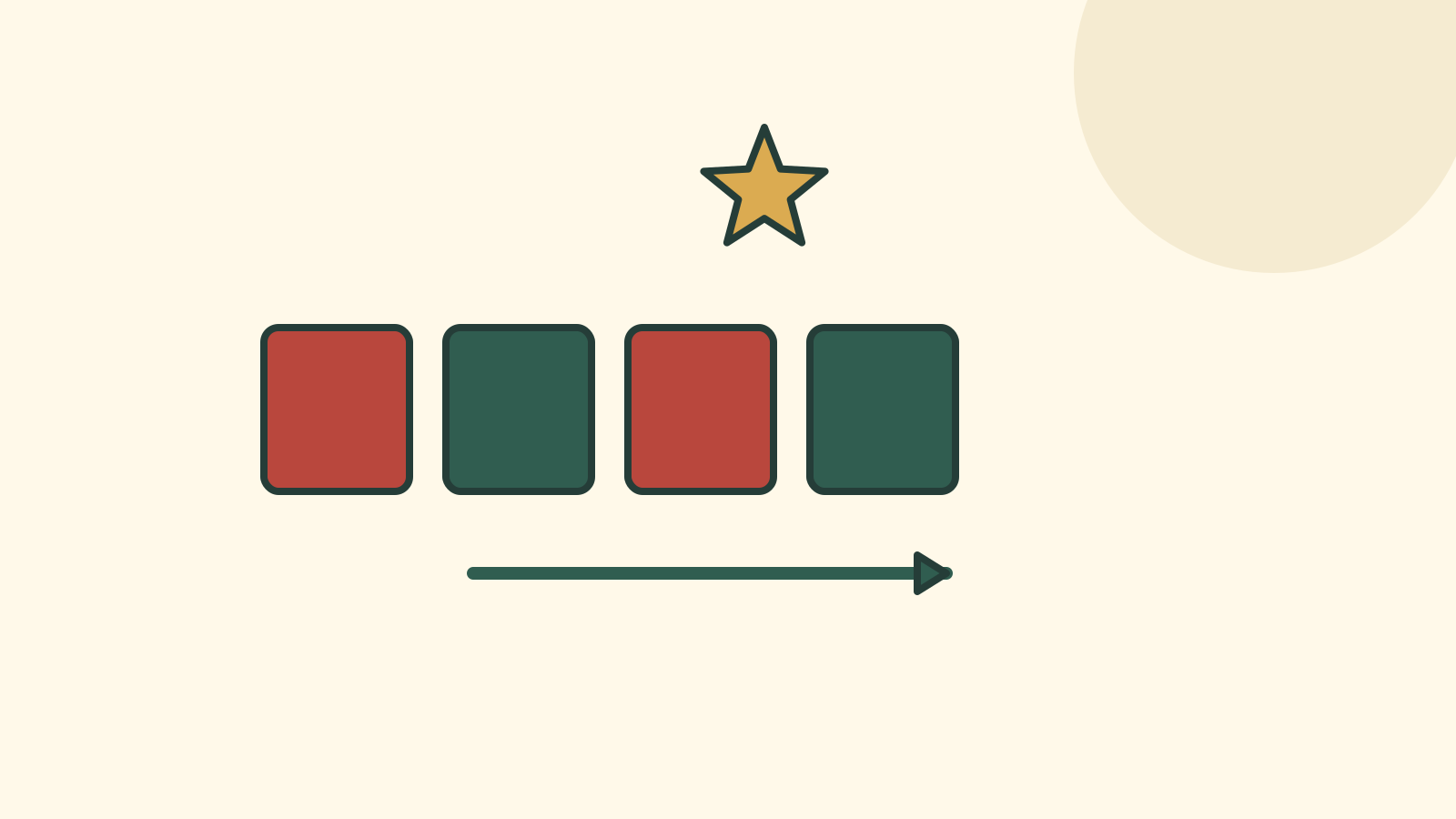
The intended sequence is: card falls, ball rolls, final card moves. None of those transitions is guaranteed by a drawing. Card stiffness, ball shape and the slope all affect the result. Try the real materials before calling the chain ready.
| Stage | Input | Intended output |
|---|---|---|
| 1 | Gentle push on the first card | Card nudges the ball |
| 2 | Ball starts moving | Ball follows the channel |
| 3 | Ball reaches the end | Final card moves visibly |
Test the last connection first
Set the ball near the bottom and release it toward the final card. Does the card move? If not, adjust its position or make it lighter. Keep the ball contained rather than solving the problem with a steep drop.
Next try the channel alone. Release the ball near its top without the starting card. Watch for sticking, escape from the sides or a missed final target. Change one feature, then repeat.
Finally add the starting card. Check whether it nudges the ball without blocking the channel. A card that simply lands on top of the ball has not completed the intended handoff.
Join the stages and reset carefully
Mark each successful position lightly on the table covering or on a separate base sheet. Run the full sequence, then reset all three stages to their marks. If it fails, identify the first missing output; do not rebuild every stage immediately.
The Exploratorium’s chain-reaction guide describes connecting one event to another. Use it for more ideas once your three stages work together.
Add the Christmas detail after the mechanics
Draw a star on the final card or write a greeting inside it. Retest after adding decoration: extra layers can change how a card stands or moves. The greeting does not have to fly into the air or reveal a gift.
Stop if the materials or location no longer suit the group. You can keep a simple sketch of the positions that worked. The finished result is a short chain whose individual connections you have checked with your actual materials, and whose full sequence you can reset and observe.