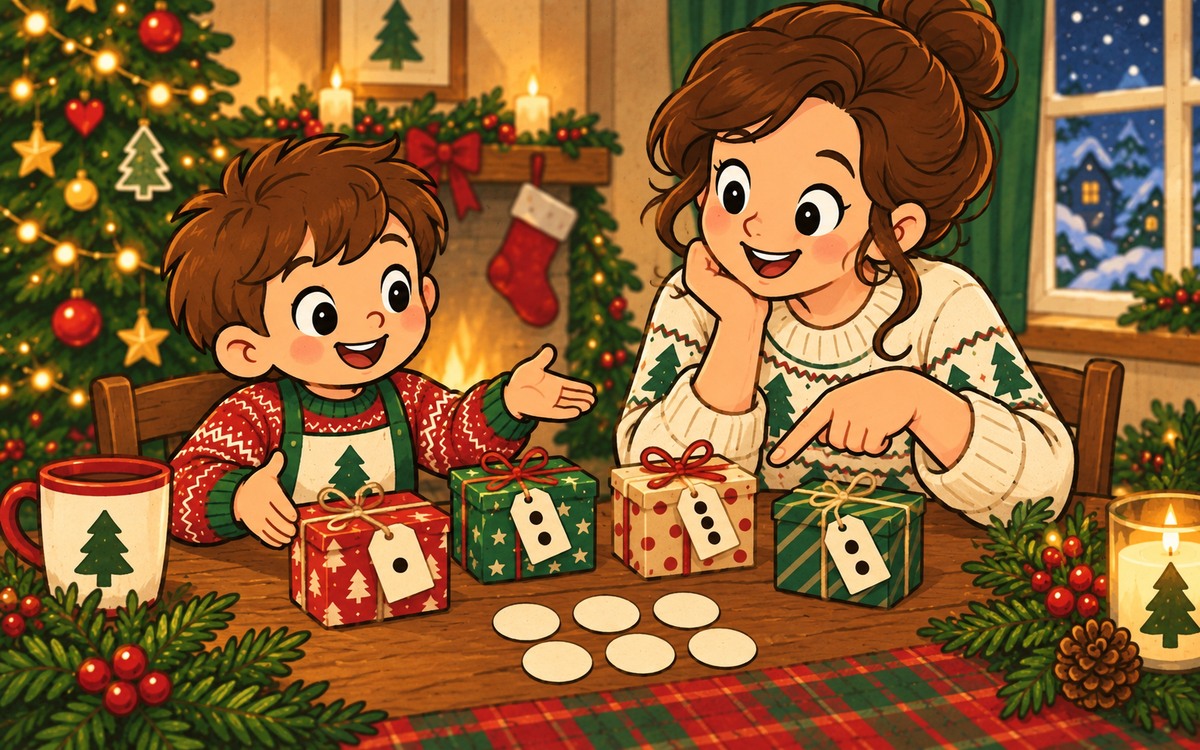
Draw one Christmas scene from opposite sides
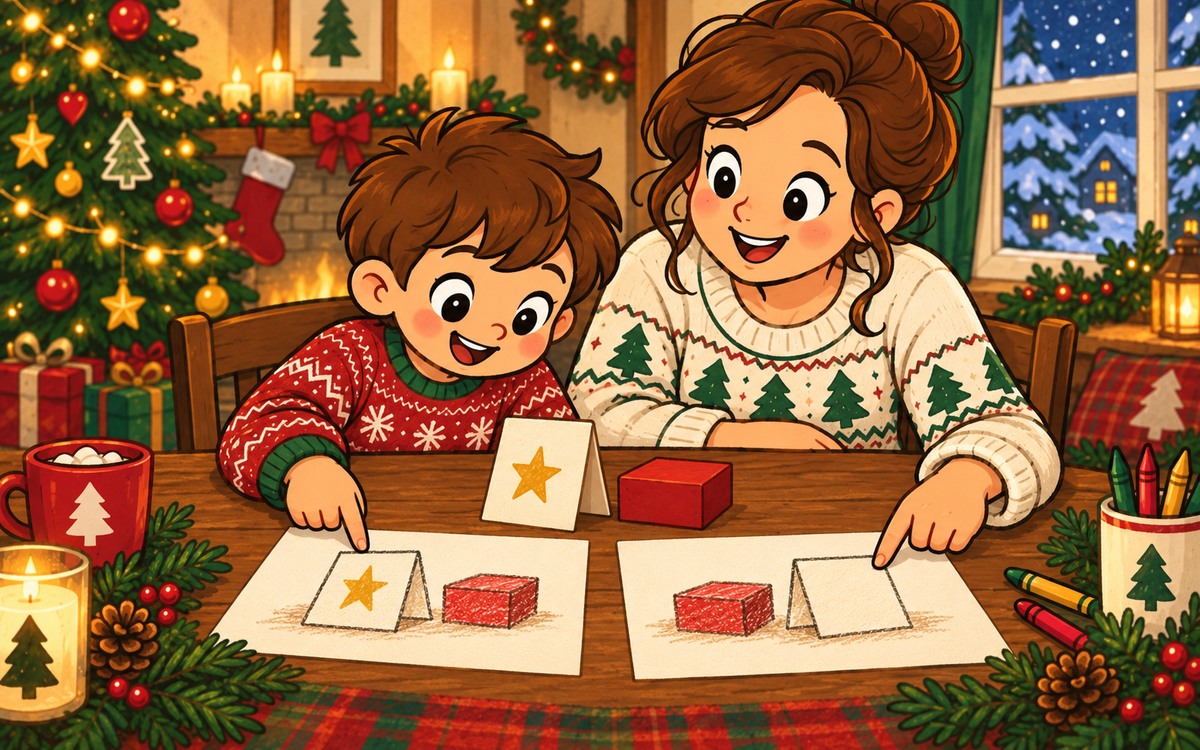
Set a folded card and a small box on the table. Draw what you see from one seat, then move to the opposite side while the objects stay still. Compare the visible details in both pictures.
Set up two objects and two places to look
Use a small plain folded greeting card, a closed empty box, two sheets and pencils or crayons. The card and box will stand for a pretend Christmas table scene. You do not need to draw a whole room.
Open the card slightly so it stands like a tent, with its fold at the top and both free edges on the table. Check that it stays upright. Draw one gold star on a broad outside face and leave the opposite outside face plain. Place the box beside it, with space between them.
Choose a first seat facing the star side and a second place across the table, facing the plain side. Look from seated eye height rather than leaning over the card. Before drawing, check which faces you can actually see from each place. Adjust the arrangement now if necessary.
Draw the first view from your seat
Keep both objects still. On the first sheet, draw the card face you can see and add the star if it is visible. Add the box in its apparent position beside the card. Simple outlines are enough; this is not a lesson in perfect perspective.
If you can see a box side as well as its front, you may add it. Leave out a hidden face instead of drawing every side you know exists. An adult can ask, “Can you see that part from here?” without taking over the pencil.
Move yourself, leaving the scene alone
Put the first drawing aside. Walk to the opposite place and sit down with the second sheet. Keep the card, box and their spacing unchanged; turning the card would change the scene you are comparing.
Draw the faces visible from this seat. The plain card side may replace the star side, and the box may appear on the other side of the card. Check by looking rather than copying those expectations.
If the model tips or someone moves it, restore the original arrangement before continuing. If that is difficult, reset it and make a new pair of drawings.
Compare one visible difference
Bring the two pictures together. Point to one difference you observed: the star, a visible box side or where the box appears beside the card. A picture can show a different view without being wrong.
You can return to each seat to check a detail. If two drawings feel too much, an adult can make one while the child makes the other, or you can point to the changing faces together. Keep both pictures if you want; one comparison is enough.
OUR TWO VIEWS
Same objects: one folded card, one closed empty box.
Star on one outside face; opposite outside face plain.
First seat: ______
Faces visible there: ______
Second place, across the table: ______
Objects stayed in the same positions: ______
Faces visible from the second place: ______
One observed difference between the pictures: ______
We checked it from the seats / drew together / pointed instead.