Describe a Christmas picture for someone else to draw
Take turns giving three clear drawing directions. Compare the pictures together and change one instruction before trying again.
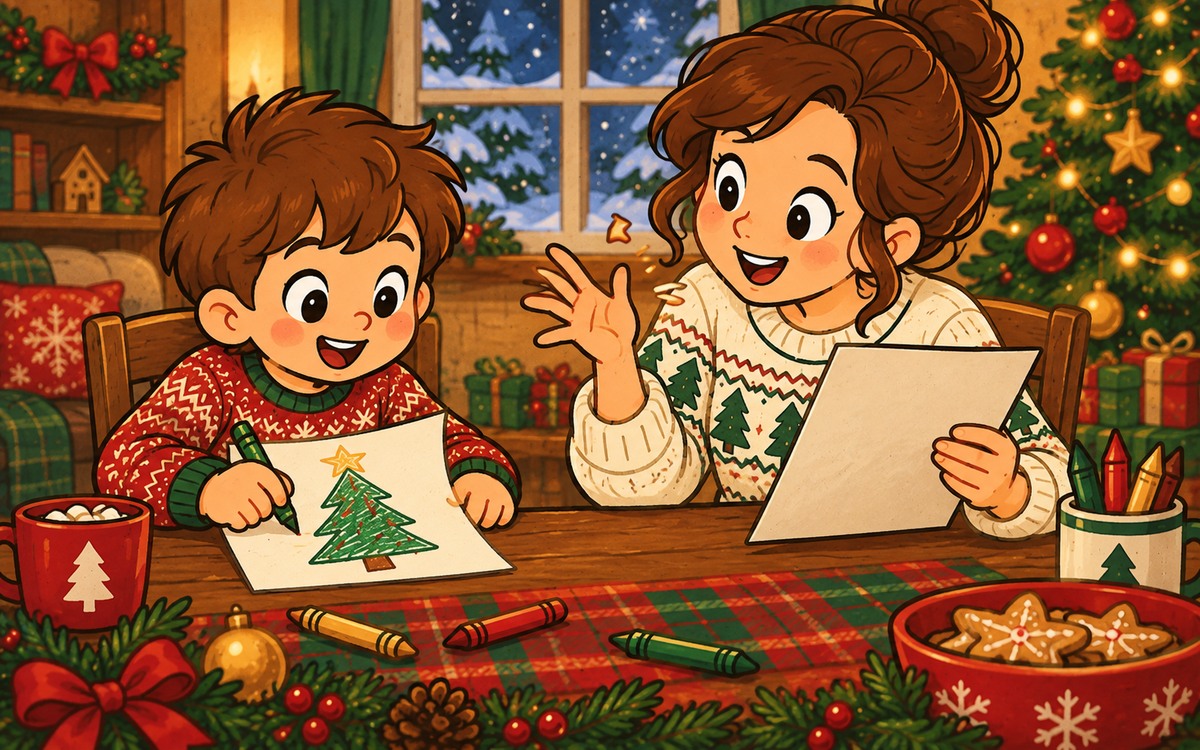
Two people can make different Christmas pictures from the same short description. Give each person paper and a pencil. One draws a simple model, then describes it without showing the page. The other draws what they understand. The interesting part is finding out which details your words actually included.
Choose a picture with three parts
For the first turn, the speaker can draw a large triangle for a tree, a short trunk underneath and a star at the top. Keep the model simple enough to describe in three instructions. Leave extra presents, snow and decorations for another turn.
Sit with enough space that the listener does not see the model. There is no need for a blindfold or a screen that makes talking awkward. Agree that the listener may ask questions and that the speaker will give one instruction at a time. Neither person needs to draw quickly.
Say what, where and roughly how big
Begin with the largest part: “Draw a triangle in the middle of your page. Leave some space above it.” Wait until the listener is ready. Then describe the trunk: “Put a short rectangle below the triangle, touching its bottom.” Finish with the star: “Draw a small star just above the triangle’s top point.” These are sample directions, not a required script.
If the listener asks which way the triangle points or whether the star touches it, answer before continuing. When an instruction feels too long, split it into two sentences. You can correct your wording while the game is happening; the aim is a usable description, not catching someone out.
Compare one detail and swap roles
Put the two pages side by side. Look at one concrete difference, such as the space between star and tree. Did the speaker say how much space to leave? Did both people understand “small” in the same way? A difference can come from missing information, and it does not make either drawing a failure.
Choose one clearer instruction for a second attempt, then swap who draws the model and who listens. The new speaker can use the same three parts or choose a snowman made from three circles. If you choose a new subject, describe its arrangement rather than assuming the other person sees your picture. Two turns are enough to finish; keep both drawings if you want to remember the different versions.