Keep the story behind a Christmas recipe
Capture one family memory with your child on a simple card. The story can sit beside a favourite recipe without turning your holiday into another project.
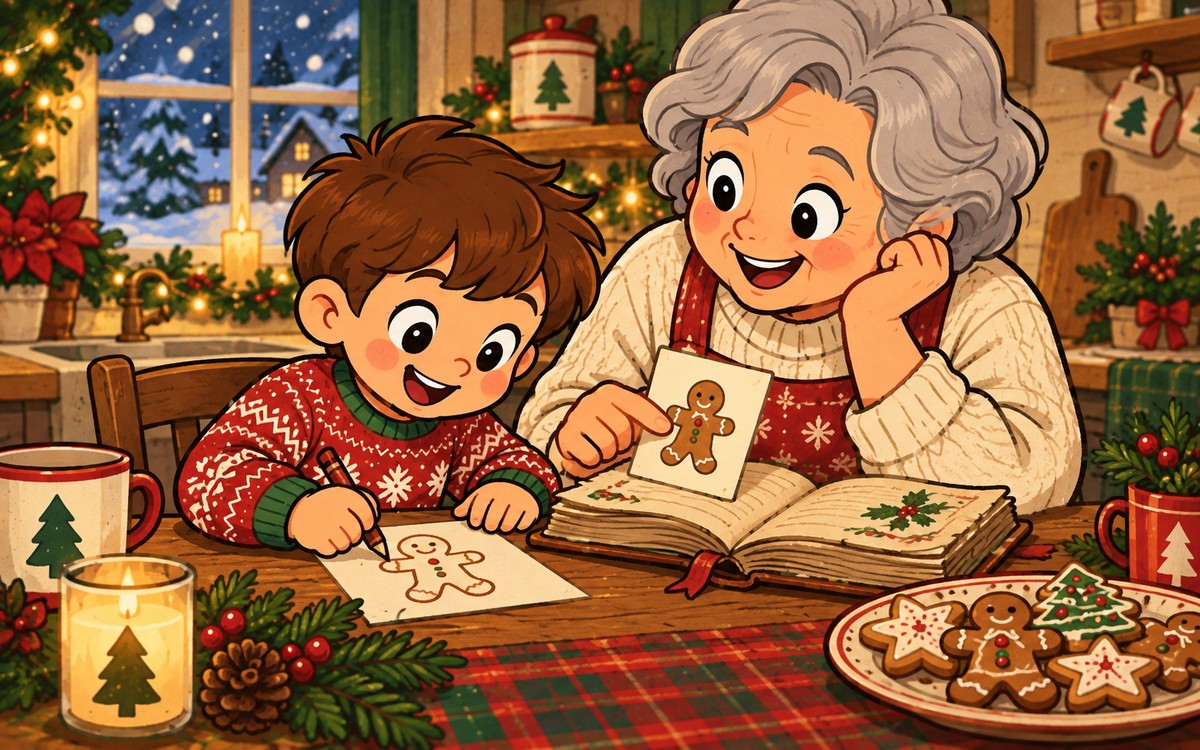
A familiar Christmas dish may bring back the person who made it, an old recipe notebook, or a plate that comes out every year. Your child can take part in that story without preparing the food. Make one small card together and keep it beside the recipe.
Choose a dish that belongs to your family's experience: cookies, a savoury meal, or something shared across different family traditions. It need not represent everyone's idea of Christmas. The activity preserves a memory, not a menu or a set of cooking instructions.
Begin with one gentle question
Ask “Who taught you to make this?” or “What do you remember about having it at Christmas?” Let the person choose how much to say. A short answer is enough. Leave room for your child's own questions rather than treating the conversation as an interview.
There is no need to record audio or assemble a complete family history. A few words and a drawing can keep one meaningful detail. If nobody remembers the recipe's origin, write “We make this now, but we do not know where it began.”
Keep the memory apart from the method
Your existing recipe contains ingredients and preparation instructions. The story card describes what the dish means to your family. Separate them so a child's picture or a remembered phrase is not taken as an instruction for cooking.
Use a plain card or a folded sheet. Your child can draw the dish, a serving plate, or someone they associate with it. An adult can write the chosen words. A rough drawing is just as useful as something neatly finished.
A fictional card
Use your own family's details in place of this example.
- Dish: The small cookies we share after dinner.
- Story: “Grandpa learned the recipe from his sister. He remembers carrying them in a blue tin.”
- Child's detail: A drawing of that tin and a cookie.
- What we know: Grandpa told us this today.
- What is uncertain: We do not know when the recipe was first written down.
Your child may prefer the tin to the history. Keep that choice: this is a connection they can revisit, not a requirement to document everything.
A card you can copy
Write five prompts: Our dish; the story someone chose to share; my drawing or detail; what we know; what we are unsure about. Leave space for each response. A child who would rather not draw can choose a word, point something out, or pick the place where you will keep it.
Ask before adding another person's name or sharing their story outside the family. You can use “an older relative” and keep the card in a private folder. Posting it online is optional and unnecessary to the activity.
Save it beside the recipe
Store the card somewhere findable while preserving the recipe itself. If an original is delicate or belongs to a relative, work from your own copy and return their paper.
When next Christmas comes, you can read the same card, add a detail, or leave it unchanged. One dish and one short conversation are enough to give your child a place in the tradition without adding more kitchen work to the holiday.