Keep the story behind a Christmas recipe
Make a small card with your child about the person or memory behind a familiar Christmas dish. A few words and a drawing are enough to keep the story beside the recipe.
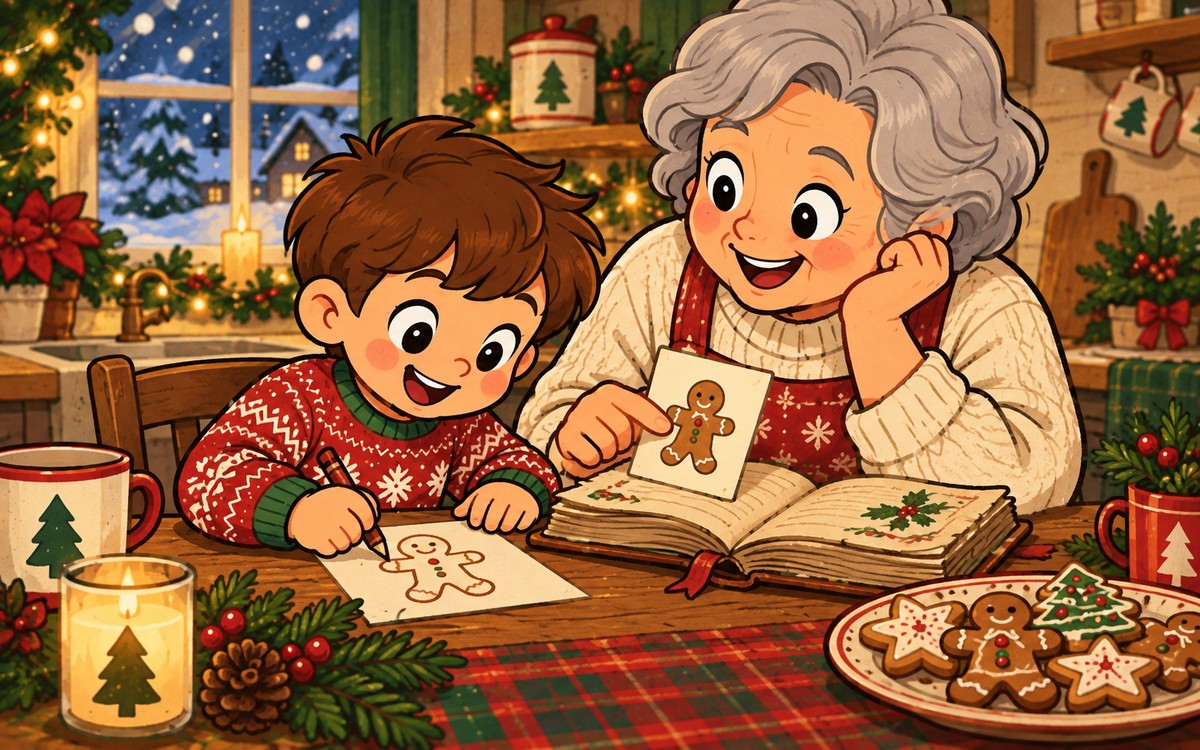
A familiar Christmas dish can carry a story: who used to make it, where the handwritten recipe came from, or why the same serving plate always appears. Your child need not cook the dish to join in. Make a small story card together and keep it alongside the recipe.
Choose something your family actually knows, whether that is biscuits, a savoury dish or a meal with no traditional Christmas name. This activity keeps a memory. It does not prescribe your menu or provide cooking instructions.
Start with one question
“Who taught you to make this?” or “What do you remember about eating it at Christmas?” gives someone an easy starting point. Let them decide what to share. A brief answer is enough; if your child has another question, follow their interest rather than conducting a formal interview.
You do not need a recording or an extensive family history. A few words and a drawing can hold the detail you want. If the origin is unknown, say so: “We make this now, but we do not know where the recipe started.”
Separate the recipe from its story
The recipe holds the ingredients and method you already use. The card holds the reason this dish matters to your family. Keeping them separate means a remembered phrase or a child's drawing will not be confused with a cooking instruction.
Use a plain card or fold a small sheet of paper. Your child might draw the dish, the plate or the person they associate with it. An adult can write the words the child chooses. The result need not be polished for display.
A fictional example
Replace these details with your own family's story.
- Dish: The little biscuits we share after dinner.
- Story: “Grandad learnt this recipe from his sister. He remembers putting them in a blue tin.”
- Child's detail: A drawing of the tin and one biscuit.
- What we know: Grandad told us the story today.
- What is uncertain: We do not know when someone first wrote down the recipe.
Your child may care more about the blue tin than the recipe's history. Keep that detail. You are making a small connection they can return to, rather than a complete historical account.
Copy a blank card
Put five prompts on a sheet: Our dish; the story someone chose to share; my drawing or detail; what we know; what we are unsure about. Leave room for each answer. A child who does not wish to draw can choose a word, point to the dish or help decide where to keep the card.
Ask before writing another person's name or sharing their story beyond the family. “An older relative” and a private folder are enough. There is no need to post the card online.
Keep it beside the recipe
Put the card somewhere you can find it again, while keeping the original recipe. If the original is delicate or belongs to somebody else, use your own copy and return theirs.
Next Christmas, read the card, add another detail or keep it as it is. One dish and one conversation are enough. Your child gets a part in the tradition without another cooking task on your list.