Christmas in Austria: Christkind, local masks and Silent Night
Explore Austria’s Christmas traditions with children: compare one family’s tree ritual, distinguish two masked customs and discover where Silent Night began.
“Who brings presents in Austria?” That question might come up while you listen to a carol together. The short answer is that Austrian Christmas tradition includes the Christkind, or Christ Child, who brings presents on Christmas Eve. Every family may have its own customs, though. Alongside the Advent wait are local processions and a carol you may know by heart.
Advent candles and family customs
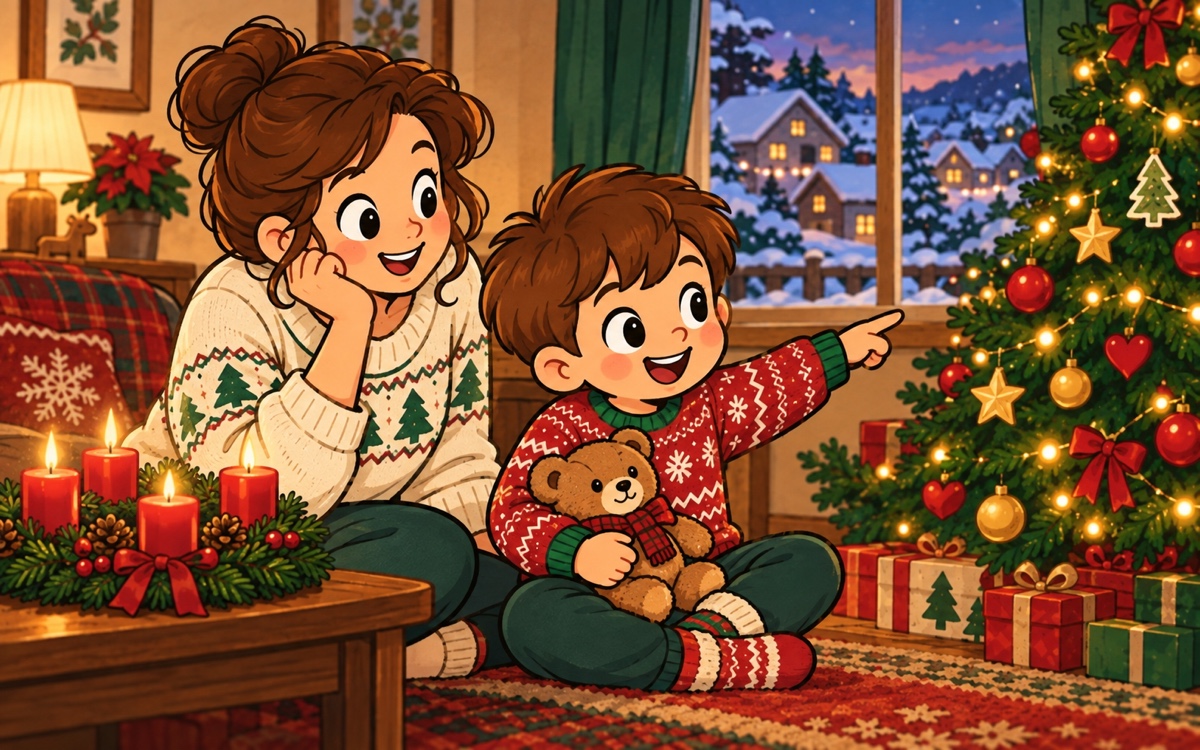
The four candles on an Advent wreath mark the four Sundays of Advent. You can recognise this Christmas countdown without knowing German. You can introduce Christkind as the Austrian name for the traditional Christmas gift-bringer, alongside Ježíšek, the Czech name for the Christ Child. There is no need to assign one fixed appearance or claim every household celebrates in the same way.
Austrian blogger Tina Riegelnegg describes how her parents decorated the tree secretly, then rang a bell to let the children know they could come to it. This is her own memory, not instructions for a “proper” Austrian Christmas. Pause over her story together: what reminds you of your Christmas, and what happens differently in your home?
Krampus and local processions
You can easily come across Krampus in videos from Austria. He belongs to the St Nicholas season around 5 December. That does not mean every Alpine masked procession represents the same custom or takes place at the same time.
The Gastein Perchten are one example. Austria’s inventory of intangible cultural heritage lists their procession in the Bad Gastein and Bad Hofgastein area once every four years, on a single day between New Year’s Day and Epiphany. This describes that particular procession, not the calendar of all Austrian masked traditions. When talking with children, distinguish Krampus of the St Nicholas season from this local tradition. Similar masks do not necessarily tell the same story.
Silent Night began in Oberndorf
Austria was also the setting for the first performance of Silent Night. It was sung on Christmas Eve in 1818 at St Nicholas Church in Oberndorf, near Salzburg. Joseph Mohr had written the poem in 1816; Franz Xaver Gruber composed the music in 1818. The later memorial chapel is not the original church where the song was first performed.
When Austrian Christmas comes up at home, start with something familiar to your family: an Advent wreath, the Christ Child or Silent Night. Then add one local difference. This creates an understandable picture of Austria, Czechia’s neighbour, with room for shared traditions and each family’s own customs.
Sources
- Christmas traditions in Austria — Austrian National Tourist Office
- Krampus and local traditions — Austrian National Tourist Office
- Perchten in Gastein — Austrian Commission for UNESCO
- History of Silent Night — Silent Night Society
- Tina Riegelnegg’s family memories