Christmas in Spain: from Nochebuena to Three Kings Day
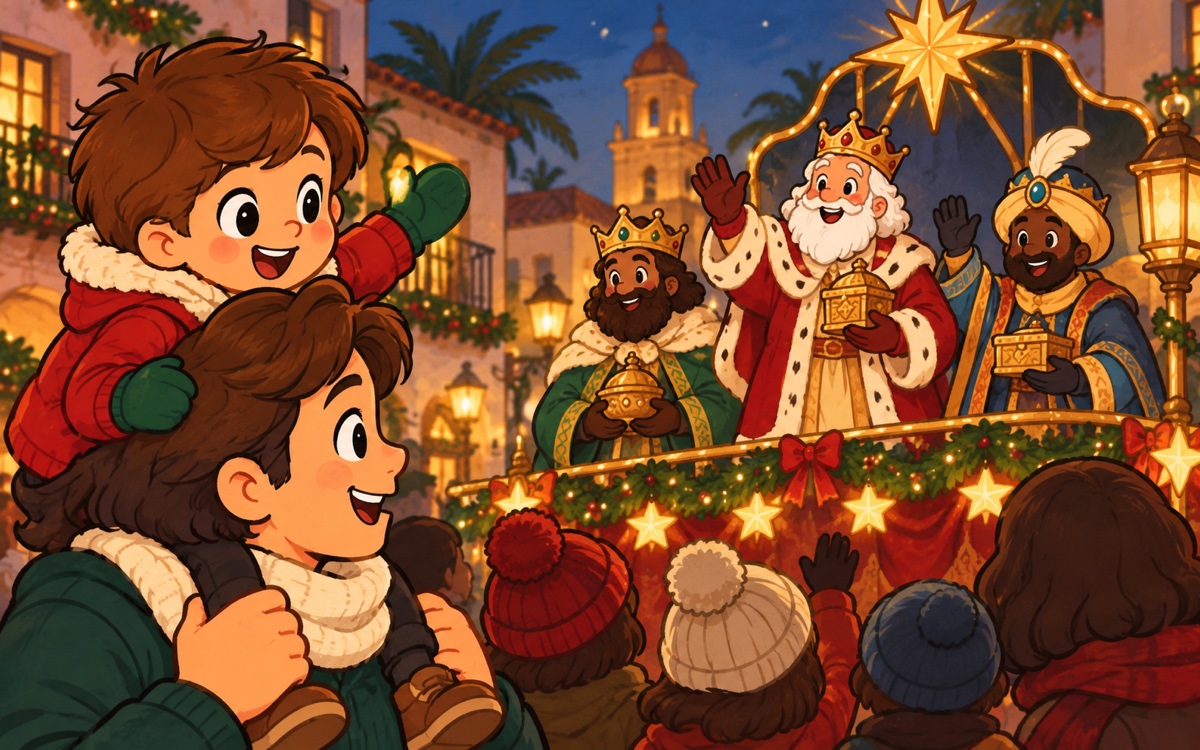
If your child sees a Spanish Three Kings parade, they may ask, “Do they still have Christmas in January?” Yes: according to Spain’s national tourist office, the Christmas season extends through January 6. That does not mean every family celebrates the same way or all presents arrive on one day. Start by distinguishing Christmas Eve from Three Kings Day in January. If you come across a Christmas log, add one more point: this is a Catalan custom, not a rule for all of Spain.
Nochebuena: a familiar date, a different name
Nochebuena is the Spanish name for Christmas Eve, December 24. The official tourism overview associates it with a festive family meal. You could tell your child: “We know this evening too. In Spain it has a different name, but their Christmas story does not end there.”
Christmas sweets include turrón, called torró in Catalan. Knowing the name is enough for a first conversation; you do not need to change your menu or prepare another celebration. You can simply talk about how Spanish Christmas also includes something sweet.
Reyes: an evening parade, presents the next morning
Reyes refers to the Three Kings. In Barcelona, the Kings’ parade, called Cavalcada in Catalan, traditionally takes place on January 5. Gifts arrive during the night of January 5–6 and are opened the following morning. The evening parade comes before the morning unwrapping.
If the dates are confusing, try a short sentence: “A parade on the evening of the fifth, presents on the morning of the sixth.” This explains the tradition described, not every Spanish household’s schedule. Sweet roscón de Reyes bread is also associated with the days around Three Kings Day; a Catalan example is called Tortell de Reis.
The Tió log belongs to Catalonia
Tió de Nadal is a Catalan Christmas custom involving a log. The local tourism account describes covering and feeding it before Christmas, then receiving sweets or gifts on Christmas Eve. Your child may be surprised that an ordinary log has a place in local tradition alongside a royal parade.
The word “Catalan” matters. A photograph of a Tió in Barcelona does not show how Christmas must look everywhere in Spain.
What to take away from the conversation
In its account of Christmas in Barcelona, Travel Family Blog describes different ways of dividing presents between Christmas and Reyes. This is one family’s experience, not a rule for the whole country. Leave room in your conversation for “in some places” and “in some families.”
Three points are enough to remember: Nochebuena is December 24, Reyes follows in January, and Tió is Catalan. Your own family’s Christmas traditions can stay just as you know them.
Sources
- Christmas traditions in Spain — Turespaña
- Barcelona’s Cavalcada and Three Kings night — Generalitat de Catalunya
- Local Christmas customs — Turisme de Barcelona
- Christmas food traditions — Turespaña
- A family view of Christmas in Barcelona — Travel Family Blog