A Christmas guessing game with one drawing and three clues
Draw the answer first, then choose three clues. Give everyone a chance to guess before showing the picture, even if nobody gets it right.
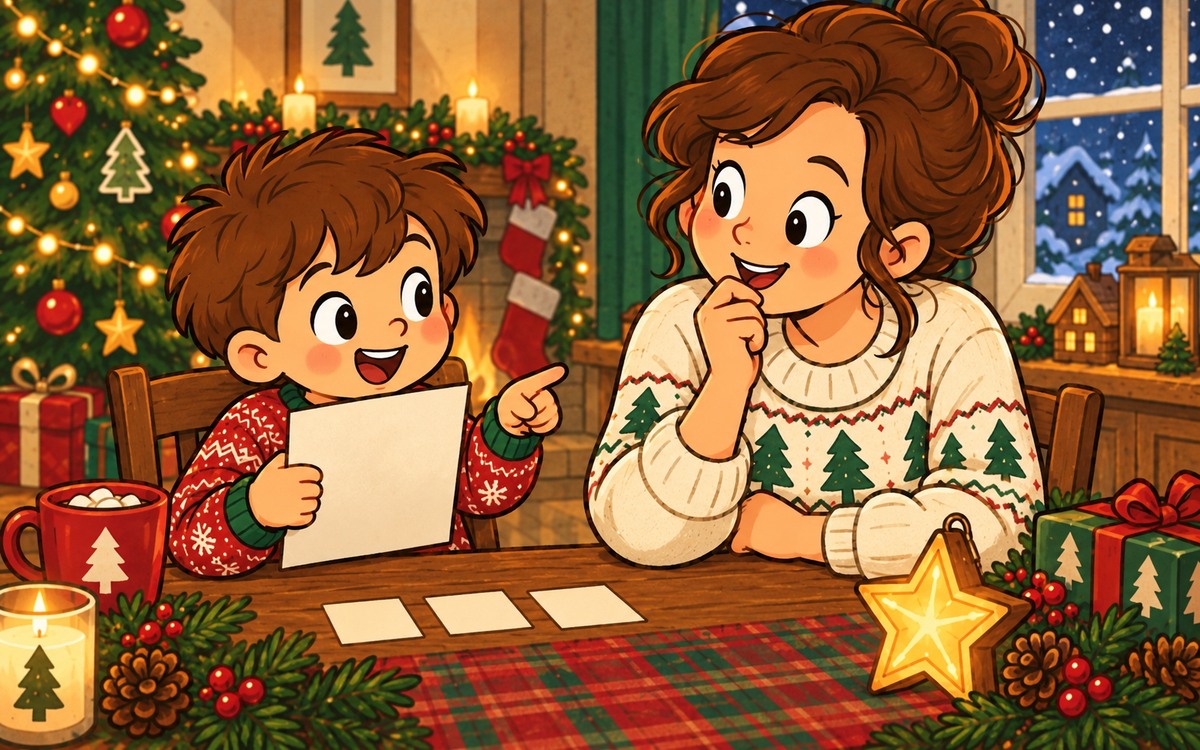
You do not need a book of Christmas trivia for a guessing game. One person draws an object and keeps the picture hidden; everyone else hears three clues. The answer comes from the maker's picture, so a child can prepare a round without remembering dates, film titles or facts about Christmas traditions.
Choose an answer before the clues
Pick something familiar that the group can name: a mitten, a gift bag, a mug or a tree decoration. Draw it on a sheet and turn the drawing away from the guessers. An adult can help write the answer on the reverse for the presenter, but reading is optional.
Decide what counts as a match. If the drawing shows a mitten, “something you wear on your hand” may be close enough for your family. Make that decision before the game rather than changing it after someone guesses. Choose another object if you cannot describe this one without revealing its name immediately.
Move from a broad clue to a clear one
Prepare three clues on separate cards or remember them together. The first says where you might find the object, the second what you do with it, and the third describes one noticeable feature. Keep each clue true to the chosen drawing; a green object cannot depend on a red-color clue.
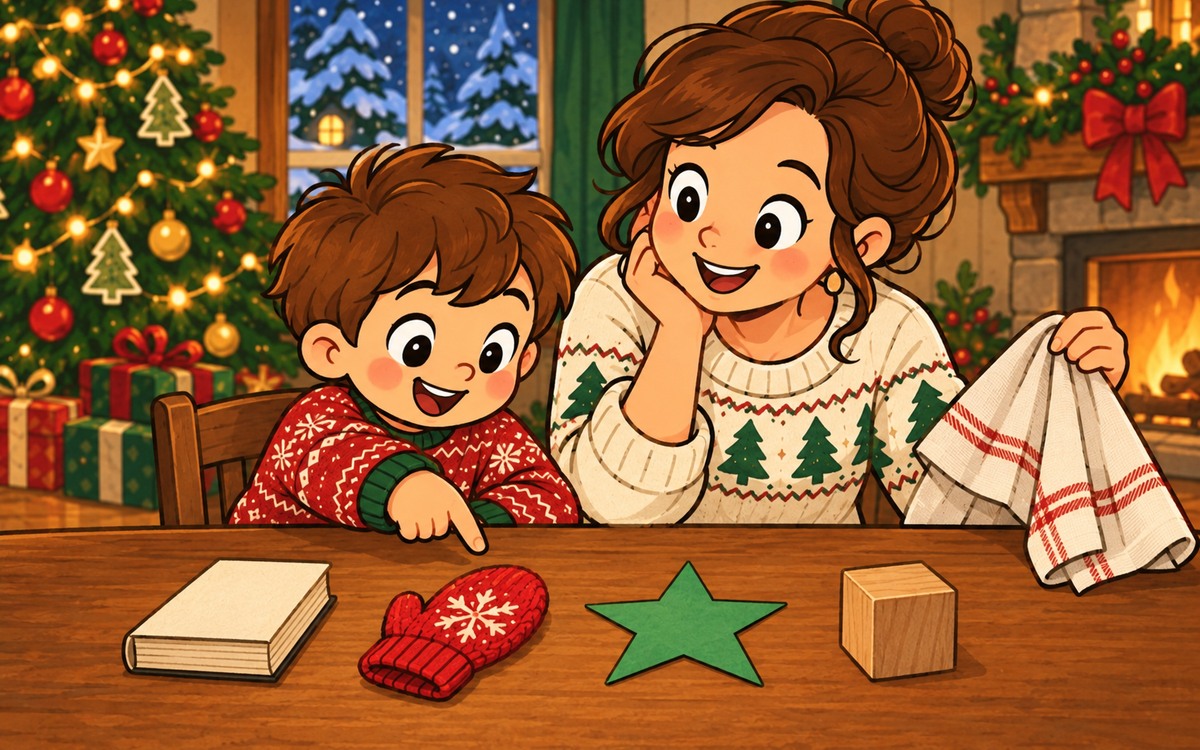
Here is a proposed example with a mitten as the hidden answer: “You might find me beside a coat”; “Someone puts a hand inside me”; “I have one space for a thumb and another for the other fingers.” It illustrates the order, not a description of every kind of glove.
Make the reveal part of every round
Say one clue, pause and invite guesses. Then give the next clue if needed. You can let people guess together, or take turns in an agreed order. Someone may pass and simply watch. Avoid letting one quick guesser answer every clue before others have had a moment.
After the third clue, show the picture whether the answer was found or not. Ask which clue helped or could be clearer, then offer the next presenter a turn. Start with one round per willing person. Keep the drawings together if you want to reuse them, and check the clues still fit before playing again.
Hidden answer:
What counts as a match:
Clue 1 — where:
Clue 2 — use:
Clue 3 — feature:
Who gets the next turn: