Christmas in Italy: northern sweets, Neapolitan Nativity scenes and Befana
“Who brings presents in Italy?” When talking about Christmas together, it is easy to stop at one figure and one date. But the Italian festive season offers more stories. Three stops are enough for a first introduction: sweet breads in the north, Nativity scenes in Naples and Befana in January. Each shows a different side of the season.
Milan and Verona: two sweet clues
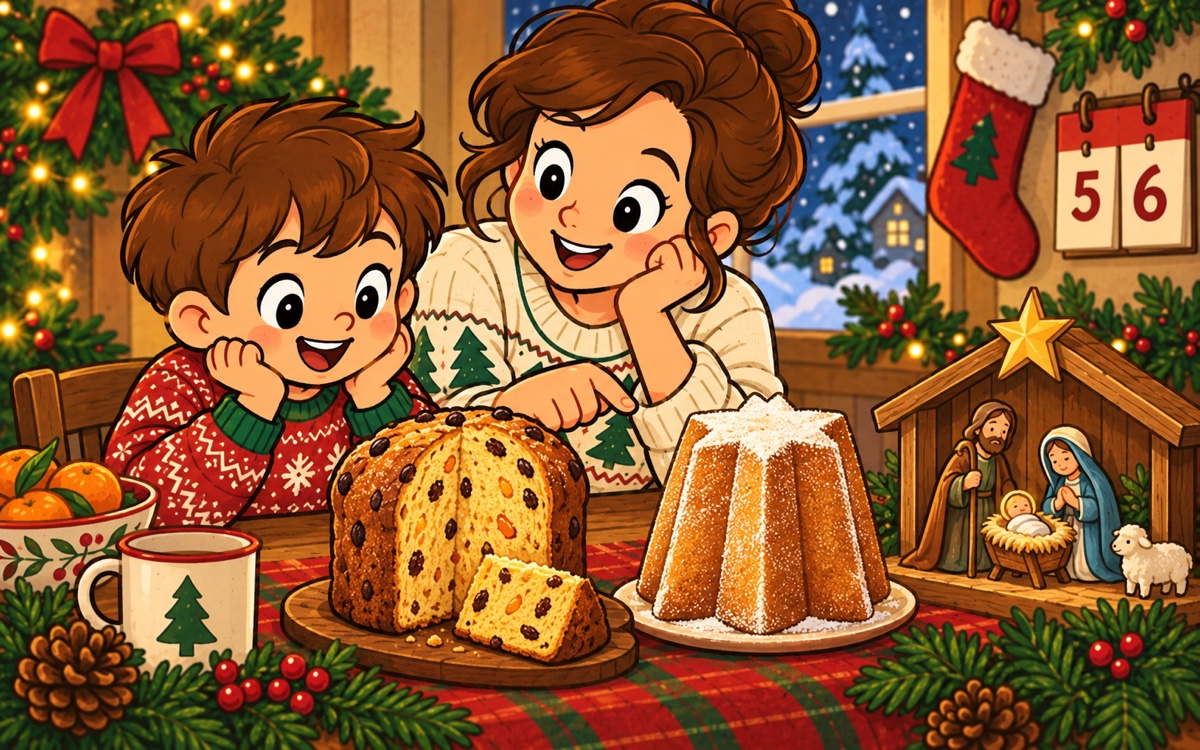
Panettone is associated with Milan, and pandoro with Verona. You can recognize panettone by its tall cylindrical shape and domed top; it usually contains raisins and candied fruit. Pandoro has the shape of an eight-pointed star and a dusting of icing sugar. Their shapes alone can help you connect each name with a picture.
Recipes come in different versions, so these are only brief clues for recognizing them. And a connection with a city does not mean the bread is eaten only there. Milan and Verona are two landmarks on our little Christmas map, not rules about what a family should serve.
Naples: Nativity scenes between craft and the present day
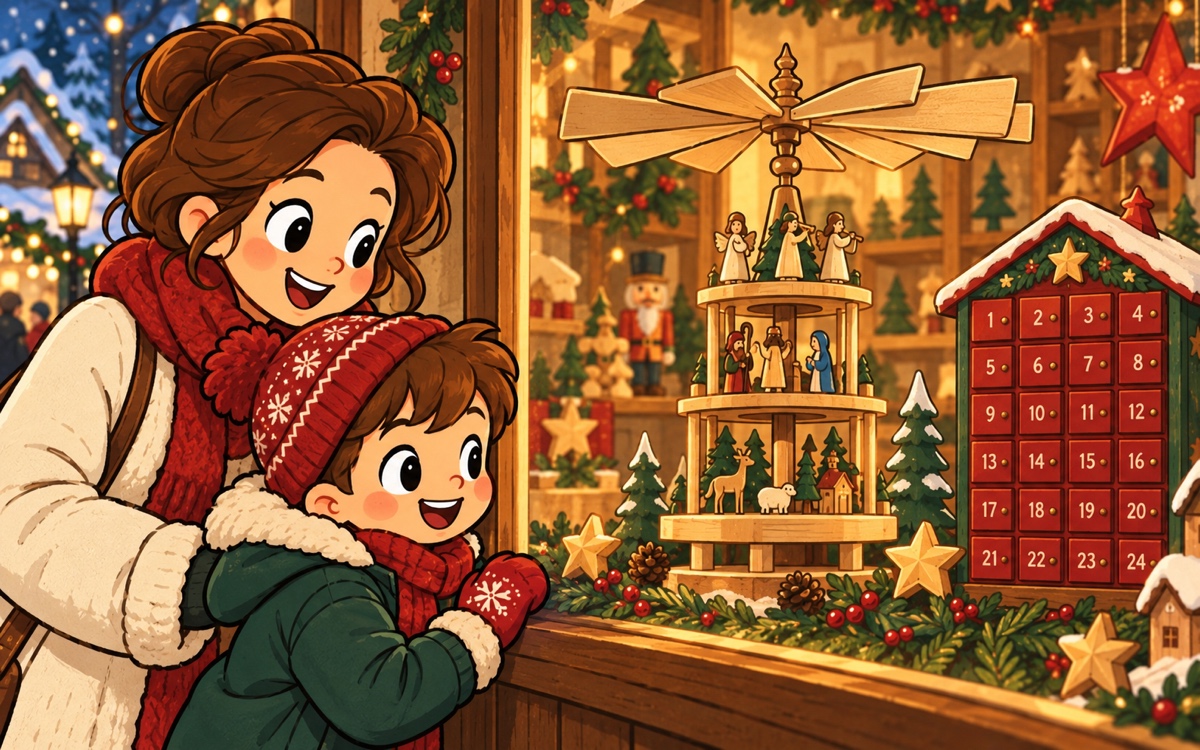
Our next stop is Naples. On San Gregorio Armeno, workshops make and sell Nativity figures. Alongside traditional characters, you can also find contemporary public figures. In this local craft, a familiar Christmas scene meets the present day.
This example does not describe every Italian Nativity scene. It shows one particular place and its work: a street, a workshop and a small figure. When talking with children, you can go beyond the general idea of “tradition” and describe something they can easily picture.
Befana’s story comes in January
Befana is a distinct figure in Italian folk tradition associated with Epiphany on 6 January. According to the story, she visits children on the night of 5–6 January and leaves treats in their stockings. Her story continues the festive season into January.
Befana is not another name for the Czech Ježíšek (the Christ Child) or Santa, and her date is not Christmas Eve. That is an important distinction for a first introduction. The story itself does not tell us when or from whom every Italian family receives presents; one custom cannot represent every household.
A short musical detour to Molise
The region of Molise adds a musical clue. In Scapoli, the craft of making the zampogna, a type of bagpipe, is preserved. The local museum’s description links it with pastoral culture and Christmas. This is another regional example, not a description of music in every Italian home.
One country, several Christmas traditions
From this short trip, keep a simple picture in mind: Milan and Verona suggest sweet breads, Naples suggests Nativity figures, and Befana belongs to the night before 6 January. You need not remember every name. What matters more is noticing that Christmas takes different forms even within one country. These stops begin a conversation; they are not a complete list of Italian customs.
Sources
- Italia.it: Befana and Epiphany
- Italia.it: panettone and pandoro
- Italia.it: San Gregorio Armeno in Naples
- Italia.it: the zampogna museum in Scapoli