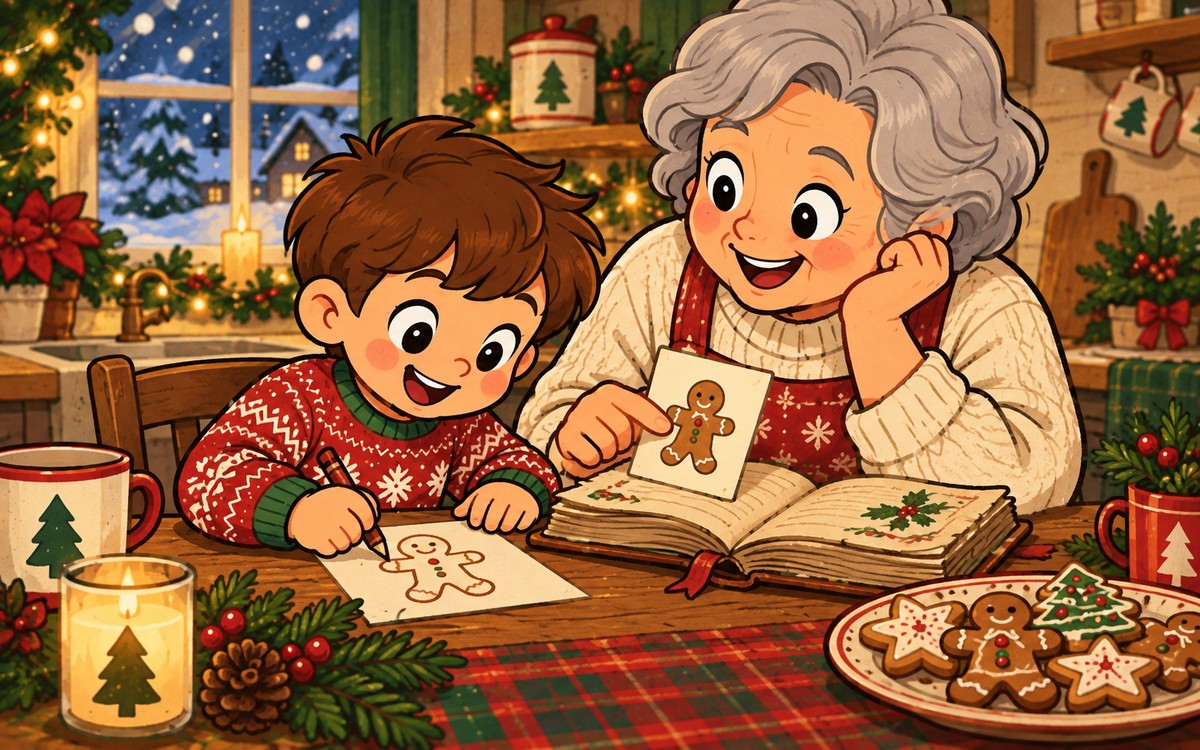
Let each guest add one line to a Christmas story
Choose a beginning, take one turn each and give the final person the ending. You will have a whole story without asking anyone for a performance.
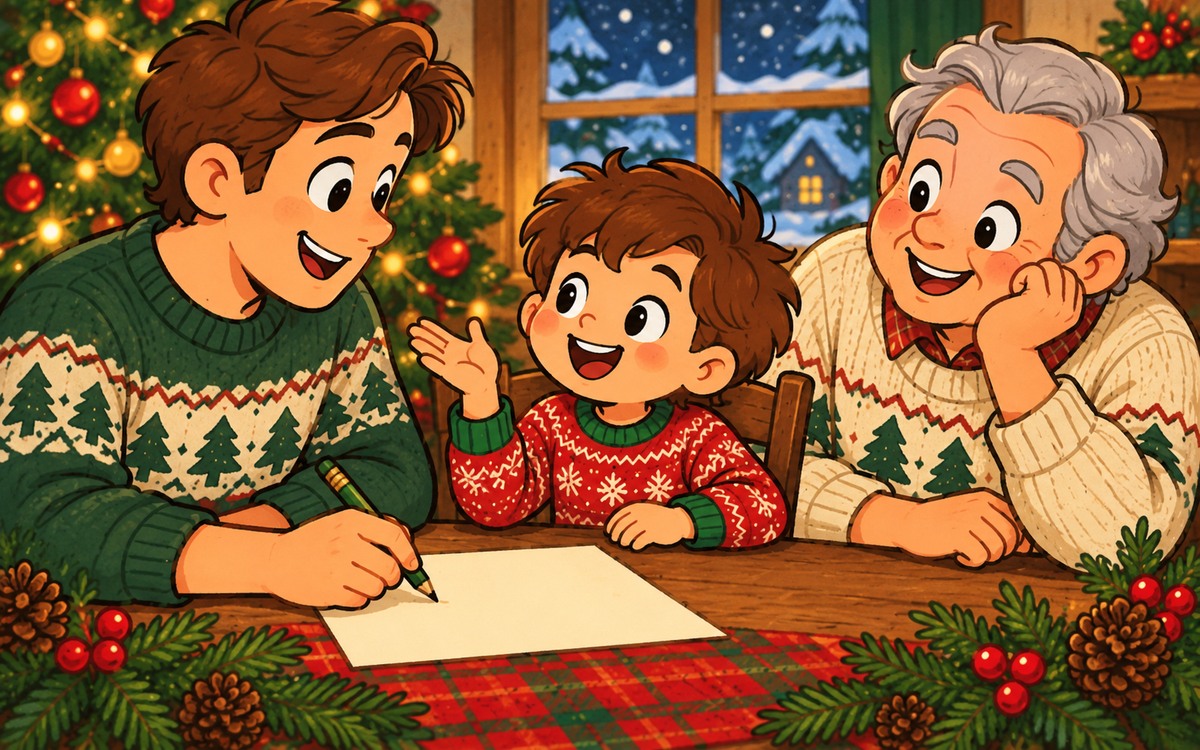
You have finished eating and want one activity that people can join from their seats. Try a story passed around the table: each person adds a single sentence. Before you start, agree who will keep the words and who gets the last line. A small boundary gives the story somewhere to finish.
Set the round before the first sentence
Choose one willing person to write, or simply tell the story aloud if keeping it does not matter. Agree on one round in a clear order. Anyone may pass. A child can dictate a sentence or draw what they want to add and ask someone to describe it.
Pick a beginning with a place and an unresolved detail: “A red envelope waited on the doorstep, but nobody knew who it was for.” Tell the final person that their job is to bring the story to an ending. With only two people, take several turns each; with many guests, keep each contribution short.
A complete original example
This fictional six-line example shows the shape, not a set of answers guests must follow:
- A red envelope waited on the doorstep, but nobody knew who it was for.
- Inside was a picture of a house with a green door.
- A little dog recognised the house at the end of the street.
- Everyone followed the dog, carrying the envelope.
- Behind the green door, a family was waiting for an invitation to dinner.
- They brought their chairs along, and everyone found room at one table.
The next sentence uses something the earlier speaker supplied. If a contribution introduces a flying kettle instead, keep it; the point is to make something together, not to correct the plot back to this example.
Keep the speaker's words
If you write the story, read each line back briefly before moving on. Ask about a word you did not catch rather than replacing it with a more polished phrase. In a family using different languages, someone can repeat the meaning in the language needed by the next person; no app is required.
Read the finished story once, then invite a title. Keep the sheet if its makers want it, or let the evening's version remain spoken. If someone wants another round, start a new story rather than making the first one continue indefinitely. Six ordinary sentences can already give you a beginning, a surprise and a place to stop.
Who will keep the words:
Order of turns:
Opening sentence:
Who gets the ending:
Title after the final line: