One Christmas object, two made-up stories
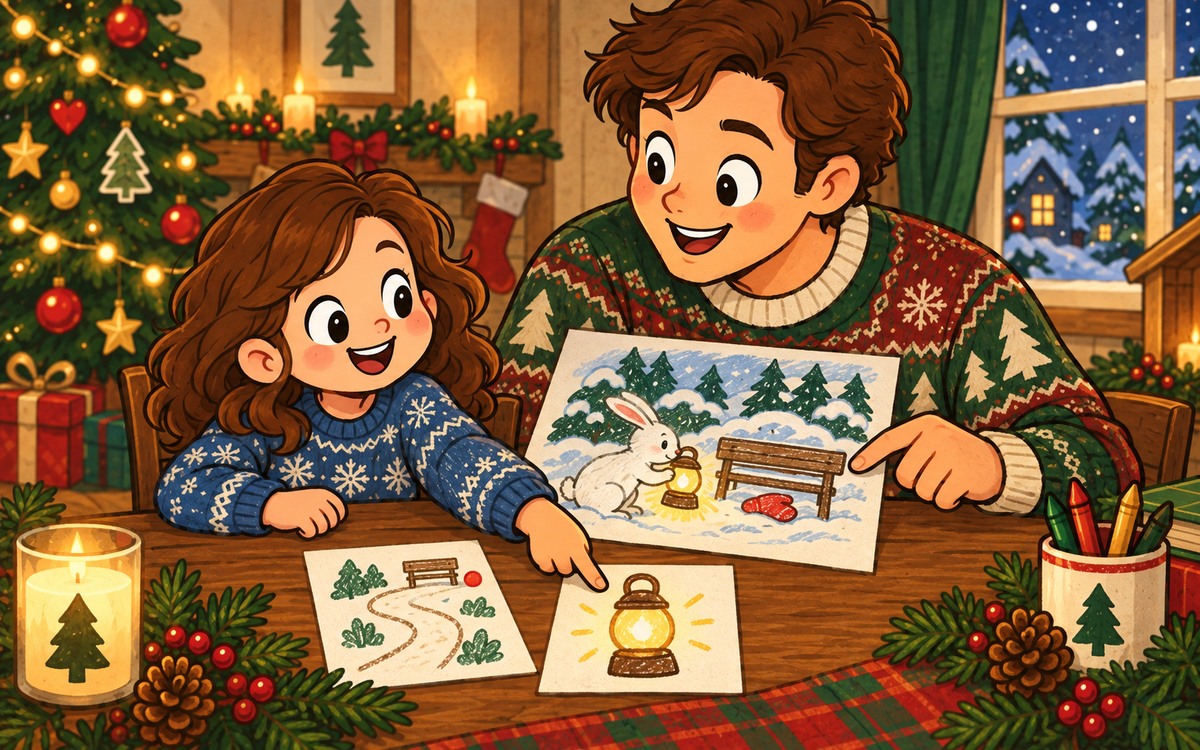
Choose something ordinary, give it two different roles and invent a short ending for each. A mitten can start both stories without deciding the whole plot.
Pick one ordinary thing from your Christmas room and ask what it could become in a made-up story. A mitten, a paper star or an empty small box gives you a starting point. Tell one brief tale, then try another in which the same object has a different job. You can keep both versions without choosing a winner.
Choose an object you can keep beside you
Use something the child can handle and recognise. Place it on the table where everyone can see it. You do not need to remove a fragile ornament from the tree or use an object someone is wearing. Say together what the real object is before you start imagining.
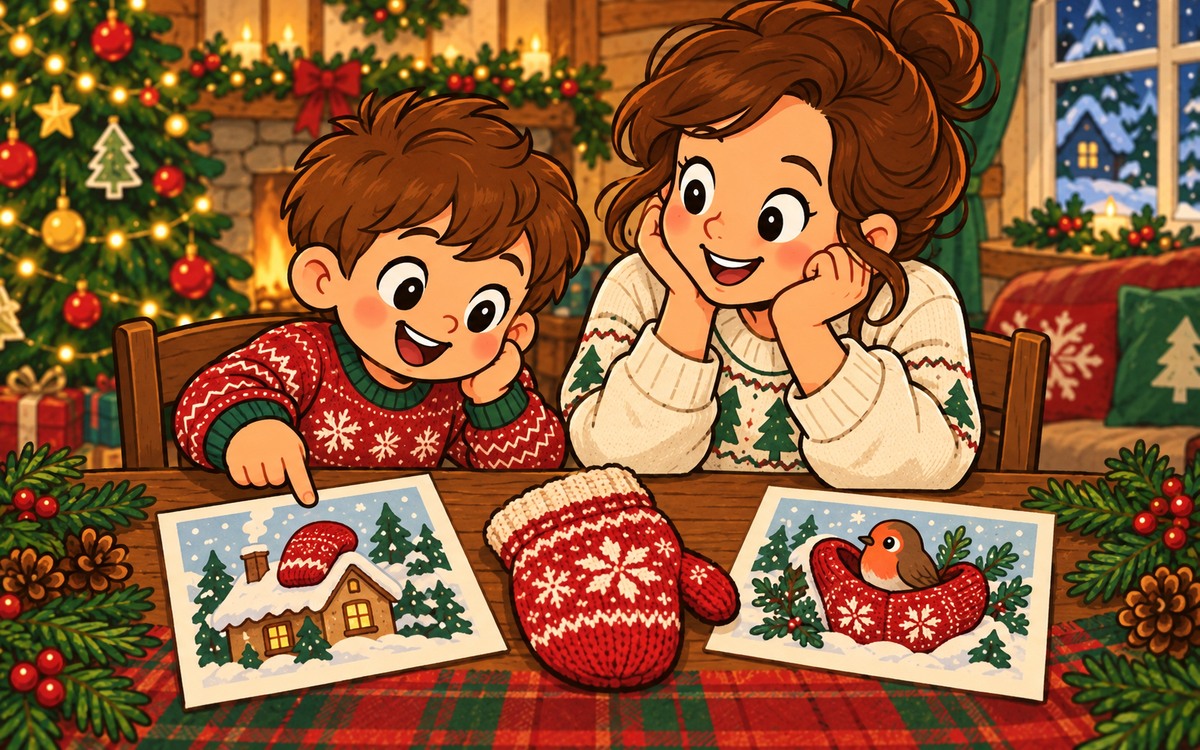
Then choose its role in the first story. A mitten might become the roof of a tiny imaginary house. Name who lives there and one thing that happens. Here is a proposed fictional example: “A little traveller found a mitten for a roof. When the wind came, she tucked its thumb around the door and invited her neighbour in.” You can change any part; this is not a remembered event or a description of how to build a real shelter.
Let one small event lead to an ending
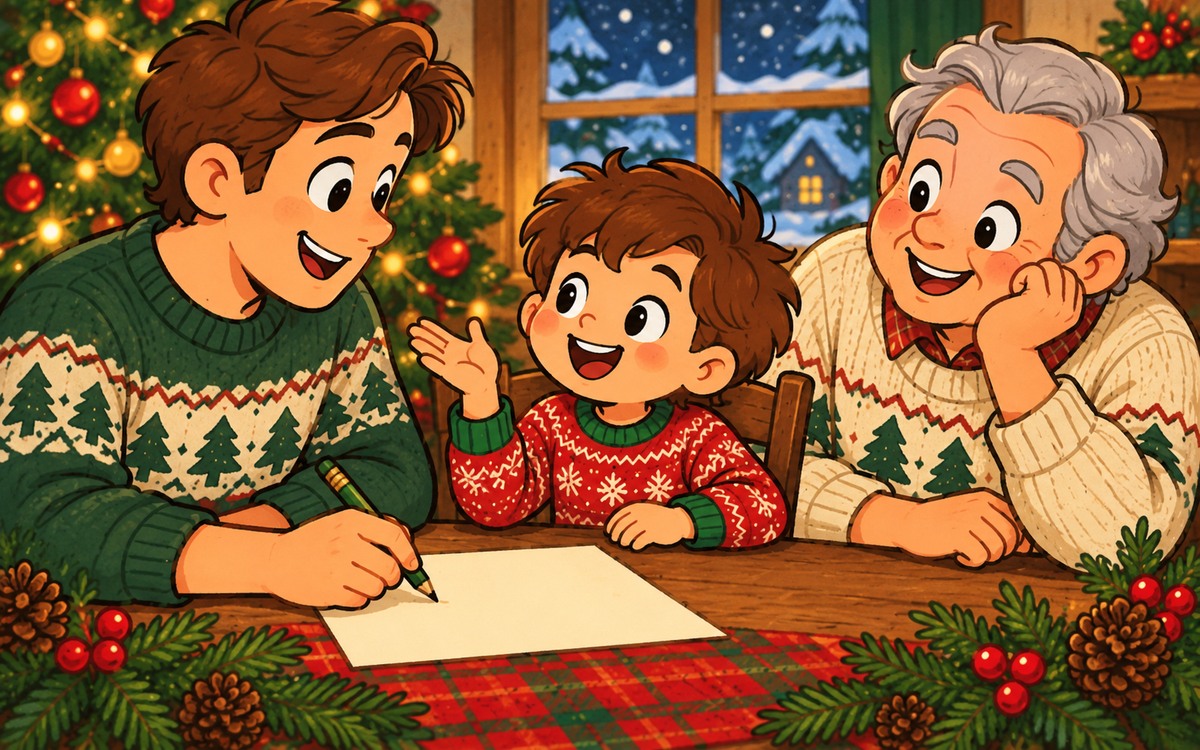
Keep the first story short enough to remember together. An adult can offer a choice if the child gets stuck: does the visitor come in, or leave a note? Let the child decide the ending rather than extending the story until it sounds like a book. You can speak alternate sentences or let one person tell it all.
Pause before the second version and name the new role. Perhaps the same mitten is now a nest in an imaginary Christmas village. A bird finds a red woollen home and decorates it with a drawn paper star. That is another invented story; it does not suggest putting a mitten outside for real wildlife. Change the character or event as well as the object's role, so the second version has something of its own.
Keep a picture of each idea if you want
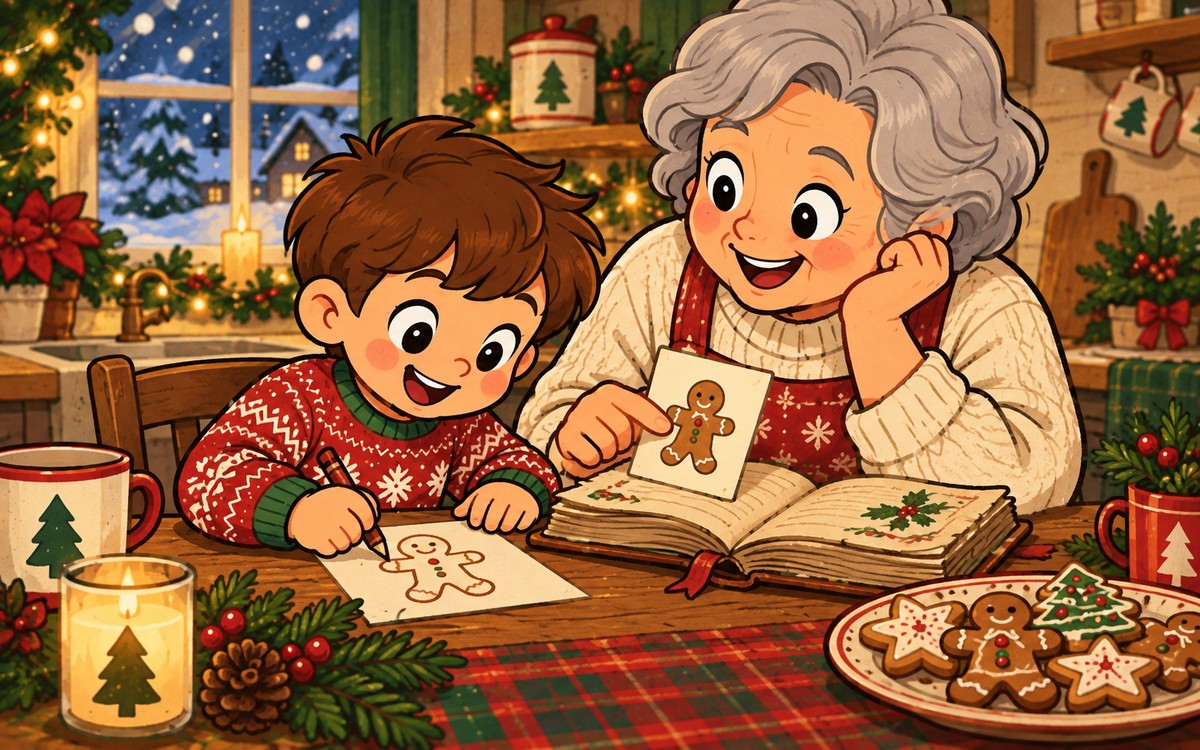
Draw two simple picture cards: one for the first role and one for the second. They can remind you of the stories without recording every sentence. If the child wants captions, write their chosen words. Keep the cards separate from any notes about actual family memories, so a made-up adventure stays clearly fictional.
Let someone who wants to listen choose which story to hear. They can ask about the other afterwards; the child does not have to perform both. Return the real object to its usual place and keep or recycle the drawings together. Next time, a different object can begin two new little tales.
Our real object:
First invented role:
First character and event:
First ending:
Second invented role and event:
Pictures or captions we want to keep: