Make a keepsake from the Christmas letters you actually shared
Sort letters your family actually shared from drafts, preserve paper and digital copies, and decide what stays private.
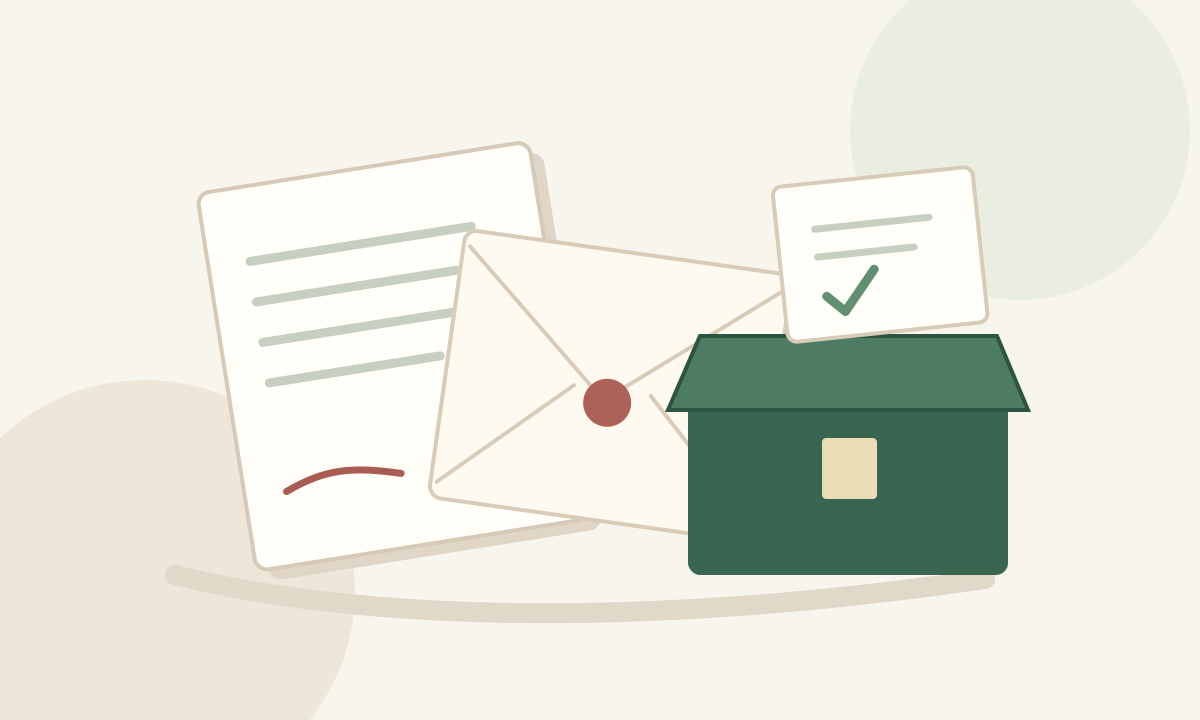
A folder of Christmas letters might hold a note your child opened, a story you read aloud, a message you sent, and a draft you never used. Each may be worth keeping. A simple note about what happened will help you remember which ones you shared.
Start with the letters and messages your family already has, on paper or in digital files. Choose a few to keep, record what you know about them, and make readable copies for a private keepsake. The printable letter-sorting sheet walks you through it; a text version appears below. You do not need an app or a complete record.
Start with what you can confirm
Gather the letters and messages you want to consider. Check your paper folder, saved files, and copies you already keep. Give each item a short, non-identifying label, such as “red envelope” or “December note.” There is no need to write a child's name or address on the sorting sheet.
For each item, mark **received**, **read aloud**, **shared another way**, **draft**, or **uncertain**. Use your family's own record or recollection. Finding a saved file does not tell you whether your child received it. If you cannot remember, mark it uncertain. Keep any drafts you value, labeled as drafts.
If different people remember an item differently, note the uncertainty instead of resolving it by guesswork. You can still preserve the item while you decide how to describe it.
Choose the story your keepsake will tell
Pick the items you want to keep, then put them in date order if you know the dates. Otherwise, use a simple order that makes sense to your family. Leave a blank or an “order unknown” note where the sequence is unclear. You do not have to include every item you found.
Write a short caption for each item: what it is, whether it was shared, and any detail you want to remember. “Read together after dinner” is useful if you know it happened. “Possibly read together” is more honest when you are unsure. Keep the caption separate from the original so you can revise it later.
One possible keepsake is a paper folder with originals and short notes. Another is a private digital folder containing copies and a simple index. You may prefer only a few favorites. Choose a form that your family can realistically keep and revisit.
Protect the paper and make a usable copy
Handle paper letters gently and choose a clean, dry place for the originals. If you want to display or pass a letter around, use a photograph or scan where possible and keep the original. The US National Archives' family archives guidance explains why careful handling and storage matter; its digitizing guidance also recommends retaining the paper original after making a digital copy. Use the copy for everyday viewing so you can handle the original less often.
Check that each photo or scan is legible from edge to edge. If the back of a page carries part of the message, capture that too. Give the copy a plain file name based on an approximate date or sequence and a neutral label, such as `2026-12-note-02.jpg`. Avoid putting private child details in the file name.
Keep digital copies findable
For a letter that already exists as a digital file, keep a private copy you can open without searching through old messages. Use clear file names and a simple folder structure. Where practical, keep a second copy in a different place and check from time to time that a file still opens. The Library of Congress' personal digital archiving advice supports clear names and separate backup copies. Choose a storage routine you can maintain, including those occasional checks; no storage choice guarantees permanent access.
The sorting sheet has separate boxes for **copy made** and **copy checked**. Mark the first when you create or save a copy. Mark the second only after you have opened it and checked that the message is complete. If the copy is blurry or incomplete, make another while you still have the original at hand.
Decide what remains private
Before sharing a keepsake or a photo of a letter, look for names, addresses, locations, images, and details a child might later want to keep private. Ask the people involved what they are comfortable sharing, and consider making a version with sensitive details covered. For UK families, the UK Information Commissioner's Office checklist offers prompts for discussing children's information and agreeing what to share and with whom.
The keepsake can stay entirely within your family. Note which copies should remain private and which, if any, you have prepared to share.
A short first pass
If the pile feels large, start with three items. Label each, mark what you know about its status, and choose whether to keep it. Make one readable copy, open it to check it, and decide where to store it. Then repeat when you have time. You can leave gaps in the record and still have something worth revisiting.
Text version of the sorting sheet
Copy these prompts into a note, once for each item. Leave identifying child details off this index.
- **Item label:**
- **Family-confirmed status:** received / read aloud / shared another way / draft / uncertain.
- **Date or order, if known:**
- **Original or source location:**
- **Copy made?** Yes / no.
- **Copy opened and checked?** Yes / no; note any issue.
- **Private storage or sharing decision:**
**Fictional example:** Blue envelope; read aloud (family recalls); second in sequence; paper folder; copy made: yes; copy checked: yes, legible; decision: private family folder. This is a made-up item, not a verified delivery or product record.
 24
24 25
25 29
29