Make a Christmas sound story with three household sounds
One narrator, three quiet sounds and a short original story are enough. Decide when each sound happens before you begin.
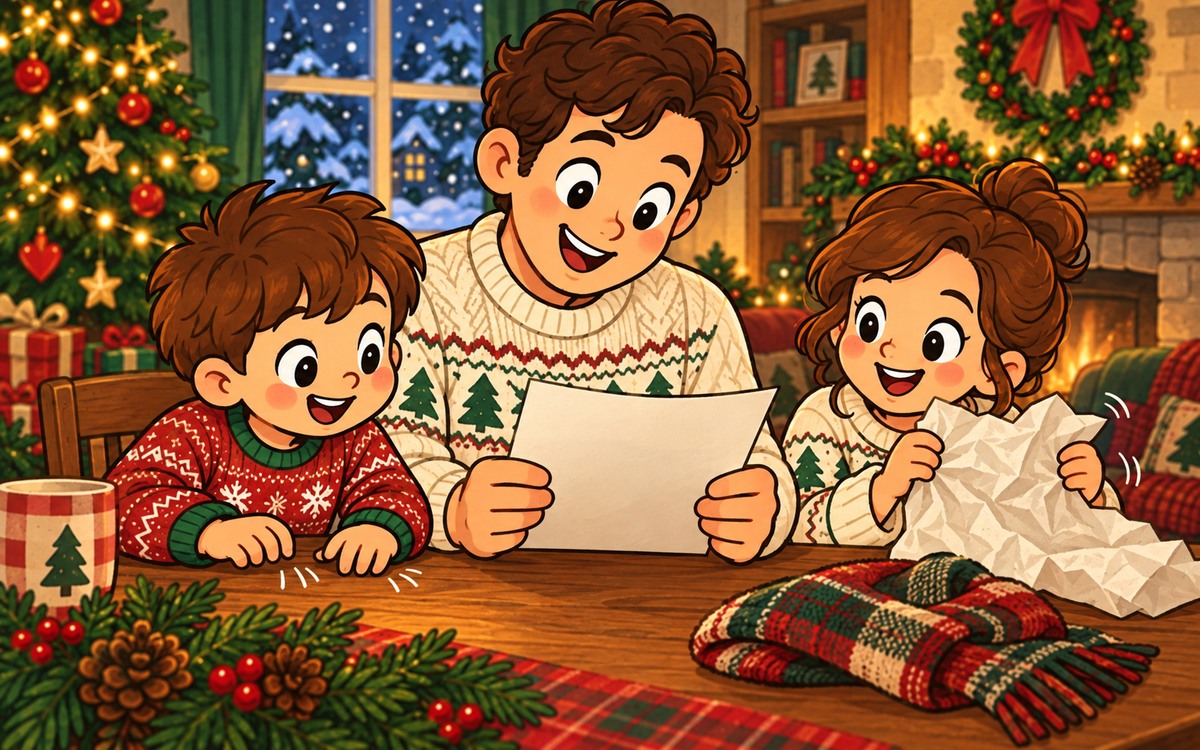
The story says an invitation is traveling across the room. Someone makes a soft rustle, someone taps on the table, and the narrator opens an imaginary door. You can turn those few actions into a small Christmas performance without a recording, an app or a collection of sound effects. Start with sounds you can make comfortably in the room.
Choose three sounds you can stop easily
Try gently rustling a large sheet of paper, brushing a folded scarf with your hand and tapping twice on a wooden tabletop. Let everyone hear each sound before deciding whether to use it. Keep them quiet; if a sound feels unpleasant, replace it with a spoken word such as “knock” or leave it out. Do not make sudden sounds next to anyone's ears.
Assign one action to each person who wants a role. One person can also do all three. The narrator keeps the cue sheet and points when it is time; no one needs to read or remember a long part. Someone who prefers listening can be the audience.
Use this original five-line story
Here is a proposed fictional script, ready to adapt:
- A little paper parcel waited beside the Christmas tree. Rustle the paper.
- A soft winter wind carried its invitation across the room. Brush the scarf.
- The invitation reached a house with a bright window. Tap twice.
- The door opened, and the visitors found a place at the table. Pause without a sound.
- Everyone sat down, and the Christmas visit could begin. Say “the end” together, if you like.
The cues belong between the sentences, so the audience can hear the words. Read the script once while the sound makers try their actions. If pointing is confusing, agree on a spoken cue or simply pause and name the person.
Rehearse the ending as well as the beginning
After the last sentence, put the objects down. That small action tells everyone the performance has finished. You can take a bow, ask whether anyone wants a second turn or move on to another part of the evening. There is no need to keep inventing louder effects.
On a second reading, let a child change one detail: the invitation could arrive at a cottage or a tent, or invite everyone to read a book. Keep the same three cues until the new version is easy to follow. Save the sheet if you want to repeat it later. The activity is already complete without filming or sharing it.
Narrator:
Paper sound:
Scarf sound:
Two taps:
How we will give cues:
Our ending: