Santa in a bilingual home: one Christmas, two languages
A family message can use two languages without repeating every line word for word.
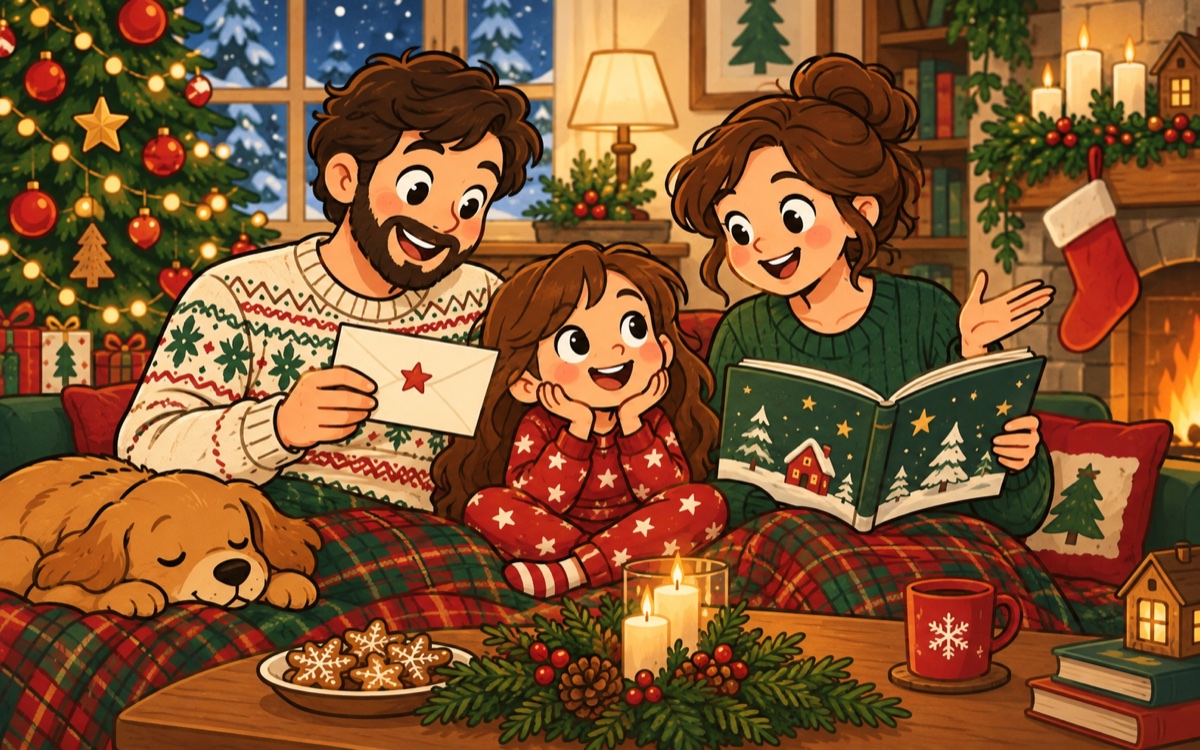
Ask which words the child hears from the people who matter to them. Maybe one grandparent says Papá Noel and another says Santa. Maybe gifts arrive after Nochebuena for one side of the family and on Christmas morning for the other. Agree on the timing first; language can follow naturally.
Write for the moment, not for a dictionary
A two-language Santa note can open in the language the child uses with a grandparent, then close in the language they use at home. It need not duplicate every sentence. Keep names and family details consistent so the story still feels like one visit.
For example: “Abuela told me you helped make the star. I saved you a little surprise for morning. Buenas noches.” Read it aloud with someone who uses both languages at home. Keep the words your child would recognise from their own family.
Keep the meaning clear when switching languages
Choose one person to review each language, then read the whole note from beginning to end. Check that names, places and “tonight” or “tomorrow” agree. A warm expression can stay in another language; a practical instruction should be understandable to the child who will hear it.
If a word is unfamiliar, explain it during the reading rather than turning the note into a language test. Your child can reply in whichever language they prefer. The point is to recognise familiar voices in a shared story, not to demonstrate equal amounts of two languages.