Make a three-scene Christmas puppet show at home
Make two paper puppets and tell a Christmas story with three picture cues. Includes scene prompts, an example story, and a no-scissors option.

Draw two characters, give them something to do, and tell a small Christmas story from three picture cues. You can read every line, make up the words as you go, or let the puppets move without speaking.
A paper star arrives at a Christmas table but cannot find a place to sit. A lantern notices, moves over, and makes room. That is enough for a show: an arrival, a change, and an ending.
Use the Star and Lantern story below or invent your own. The puppet-show sheet has three scene cues and two blank character templates. For each scene, draw what happens, choose a movement, and add a line if you want one. You can also draw on paper you already have; no account or stage box is needed.
Start with a table and two characters
Set aside paper, pencils or crayons, and a clear part of a table. Thicker paper is an option for standing puppets. Tape is optional. An adult can cut out the printed rectangles if you use them; you can skip scissors by folding two whole sheets instead.
Choose a character who wants something and another who can respond. They might be a star and a lantern, two animals, or figures your family invents. Choose a Christmas setting that feels right to you: a table, a decorated room, or an imaginary place. Snow, Santa, and a particular celebration date are optional.
Decide what your characters want or do before adding details. “Star wants a place at the table” gives the puppet mover something to show. Names and personalities can come later.
Make a puppet that stands—or keep it flat
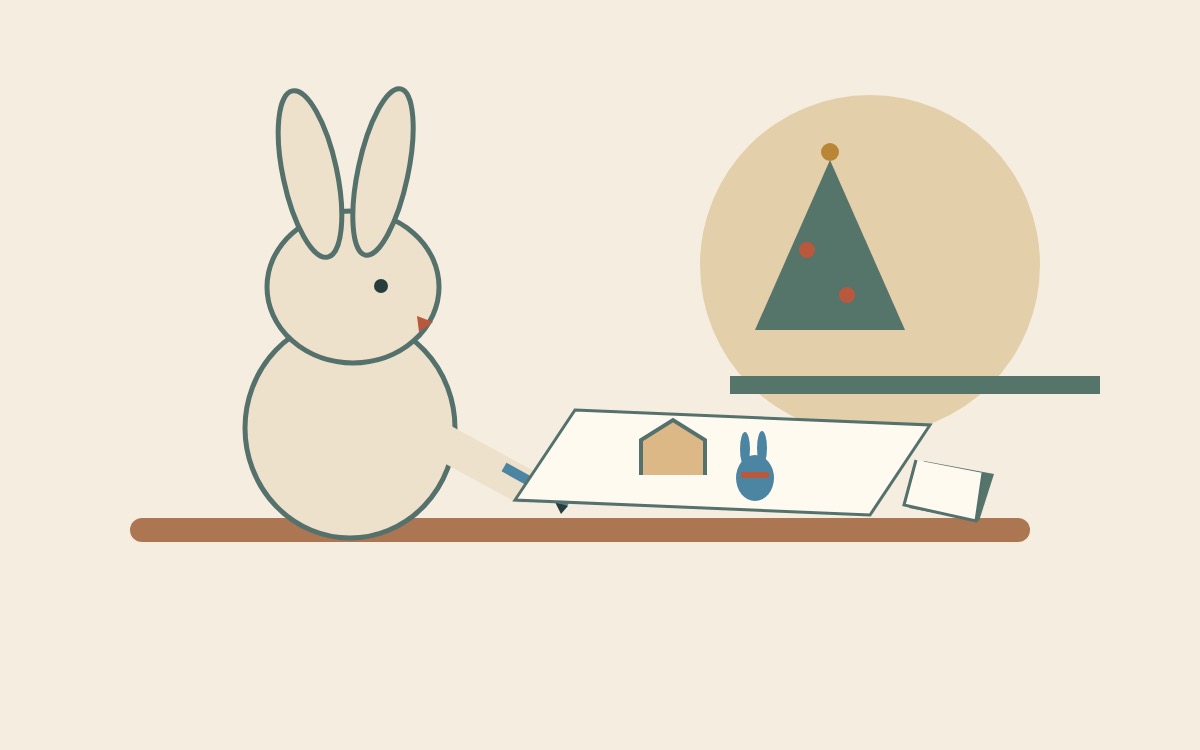
For a folded puppet, fold a sheet in half so the two short edges meet. Open it slightly and stand it with the crease at the top, like a little tent. The two free edges rest on the table. Draw your character on the outside of the panel facing the audience, with its head toward the top crease.
If you use the character sheet, ask an adult to cut around each whole rectangle. Keep both panels joined, then fold on the center line to make the same tent shape. Do not cut around the character drawing: the rectangular paper is its support.
Try the puppet on your table before adding more decoration. If it spreads too far or tips, bring the two lower edges closer together or try thicker paper. You can add a strip of tape between the lower inside edges to limit how far they spread. If it still will not stand, lay it flat and slide it, or hold it gently by an edge. A standing puppet is an option, not a condition for telling the story.
Use drawn details instead of separate tiny decorations. No sticks, heat tools, or glue gun are needed.
Give each scene one visible action
The Victoria and Albert Museum's Design and make your own story activity suggests a beginning, middle, and end, with drawing, writing, or imagining as ways to build the story. Our three scene cues adapt that structure for a tabletop show.
Draw one main action in each cue space. Use stick figures, arrows, or a large symbol—whatever helps you remember the action. Leave the optional line blank if you prefer movement or sound.
Scene 1: Who arrives, and what do they want?
Show your first character entering the setting. Give them one wish or question.
In the example, Star slides toward a drawn Christmas table and stops beside it. The narrator can read: “Star came to the Christmas table, looking for a place.”
Your picture cue could be a star, a table, and an arrow pointing toward it.
Scene 2: What changes?
Let the second character notice, answer, or try something. Choose an action you can show with the puppets.
Lantern slides toward Star, then moves to one side of the table. The optional line is: “Lantern saw Star waiting and moved over.”
Draw the two characters with an arrow showing Lantern's movement. You do not need a new set or another character.
Scene 3: How does it end?
Show what is different now. End when the action is complete rather than adding another problem.
Star slides into the space beside Lantern. Both puppets stop. The narrator can read: “Now there was room for them both.”
Draw them side by side. That picture is also your reminder to finish the show.
Choose who reads, moves, and makes sounds
Choose from three jobs: narrator, puppet mover, and sound maker. One person can do several jobs, or two movers can each take a character. Drawing the cues and watching the performance are choices too.
The narrator can read straight from the sheet. The mover follows the picture and movement prompt. The sound maker might tap the table softly as a puppet arrives or say “ta-da” at the end. Choose the sounds together; silence works too.
The Smithsonian's Making a Jellyfish Puppet home activity also brings together handmade puppets, a created setting, and a show. You can keep your Christmas version to a tabletop and two paper characters.
Set up the smallest stage that works
Put a drawing of the setting on the table and leave room for the puppets to move. For the Star and Lantern example, draw a table or two place settings on a sheet of paper. This is scenery for a fictional story; it does not need to match your family's actual meal.
Keep the three cues in order beside the mover, within easy view. Ask the audience to sit where they can see the puppet faces. If the drawings are too small to see, move the audience closer or redraw the characters larger.
A recycled box can be a backdrop if you want one. Have an adult do any box cutting and check the edges. The tabletop version needs no box at all.
Try the movements, then tell the story
Move through the three pictures once before adding words. Can Star enter, can Lantern move over, and can both finish side by side? Move the scenery or simplify an action that is awkward on your table.
Agree that anyone can say “Pause.” Stop the puppets and narration, and leave the current scene cue showing. To continue, say “Ready,” point to that cue, and restart its movement. You can also go back to the first picture or end the show.
When you are ready to perform, follow the pictures in order. Read the lines if you want them. There is no need to hide the cue sheet or memorize a script.
After the ending, let each person choose whether to repeat the show, swap jobs, or put the puppets away. If you repeat it, changing one action is enough: perhaps this time Star makes room for Lantern.
Use the three-scene puppet-show sheet
Choose Letter or A4 for printing, or follow the linear text version and draw on your own paper. Alongside the scene cues and character templates, the sheet includes the Star and Lantern example and a pause-and-restart reminder.
Start with the first picture: who arrives, and what do they want? Once that action is clear, you have the beginning of your show.
Download the Letter sheet (PDF) · Download the A4 sheet (PDF) · Open the accessible text version.
 22
22 26
26 27
27