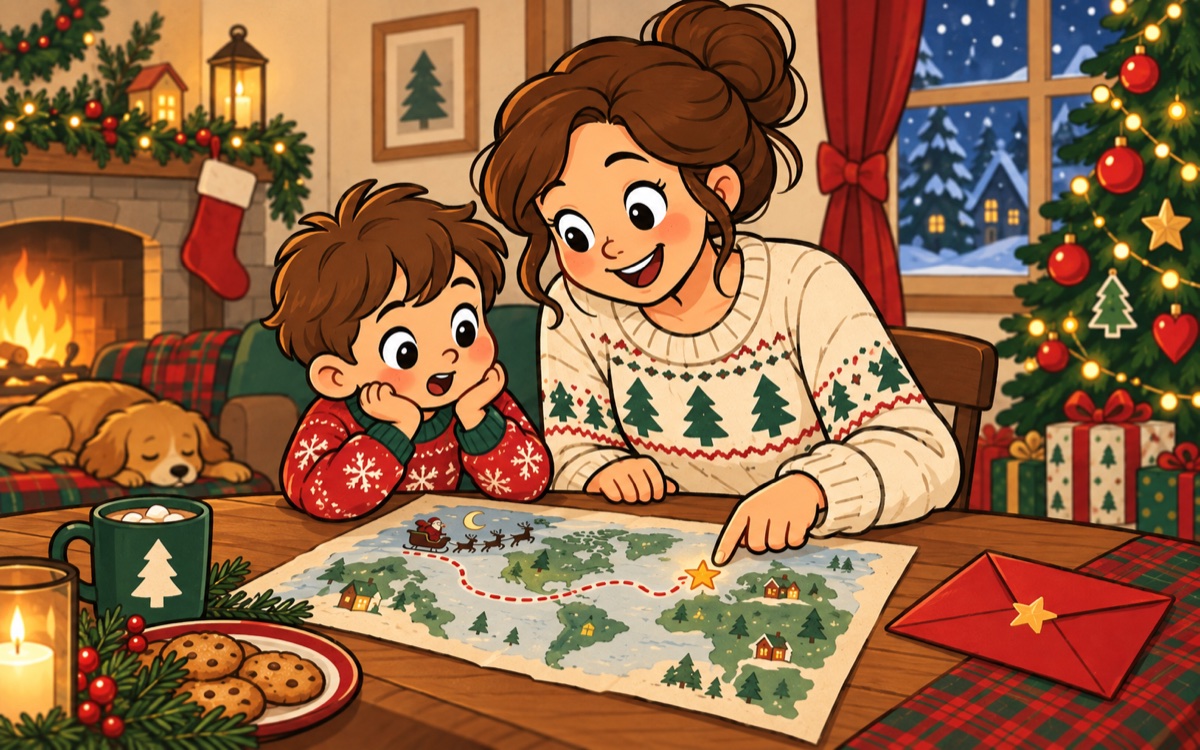
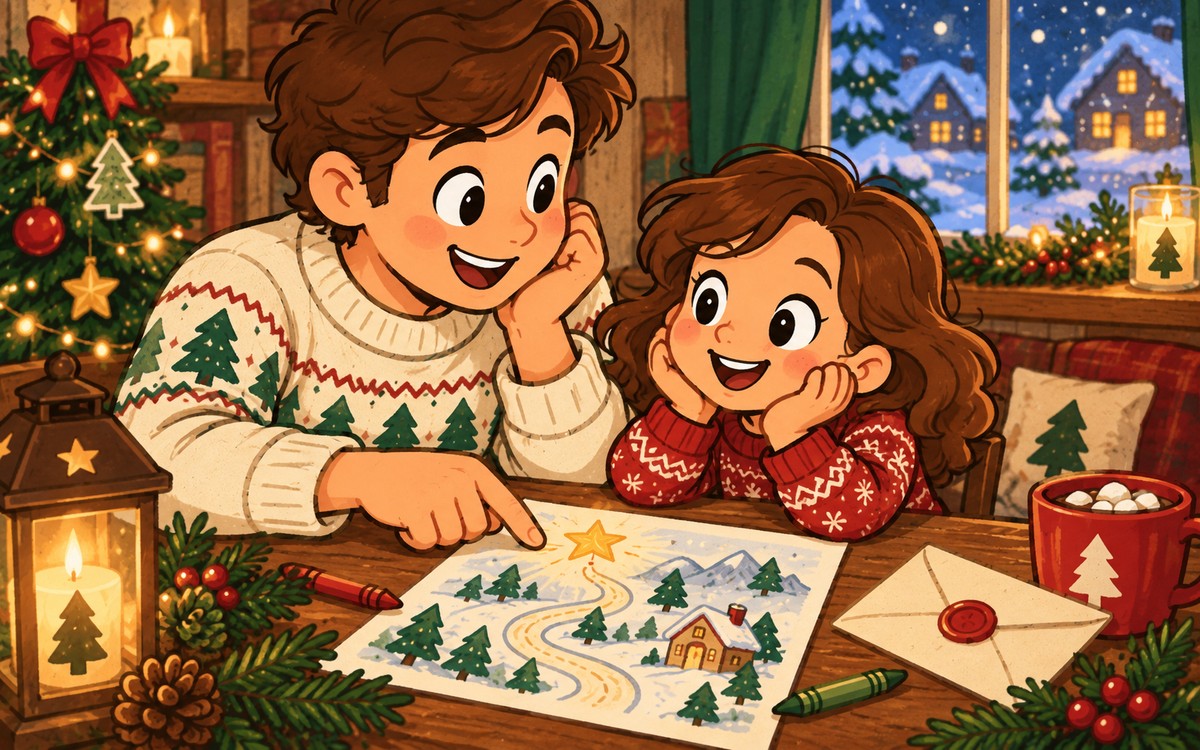
“That’s the road to Grandma’s!” A map for curious children.
One familiar river, bridge or road can make a map interesting to a child. Choose a place they know and let it lead to a conversation about a journey you have actually made.
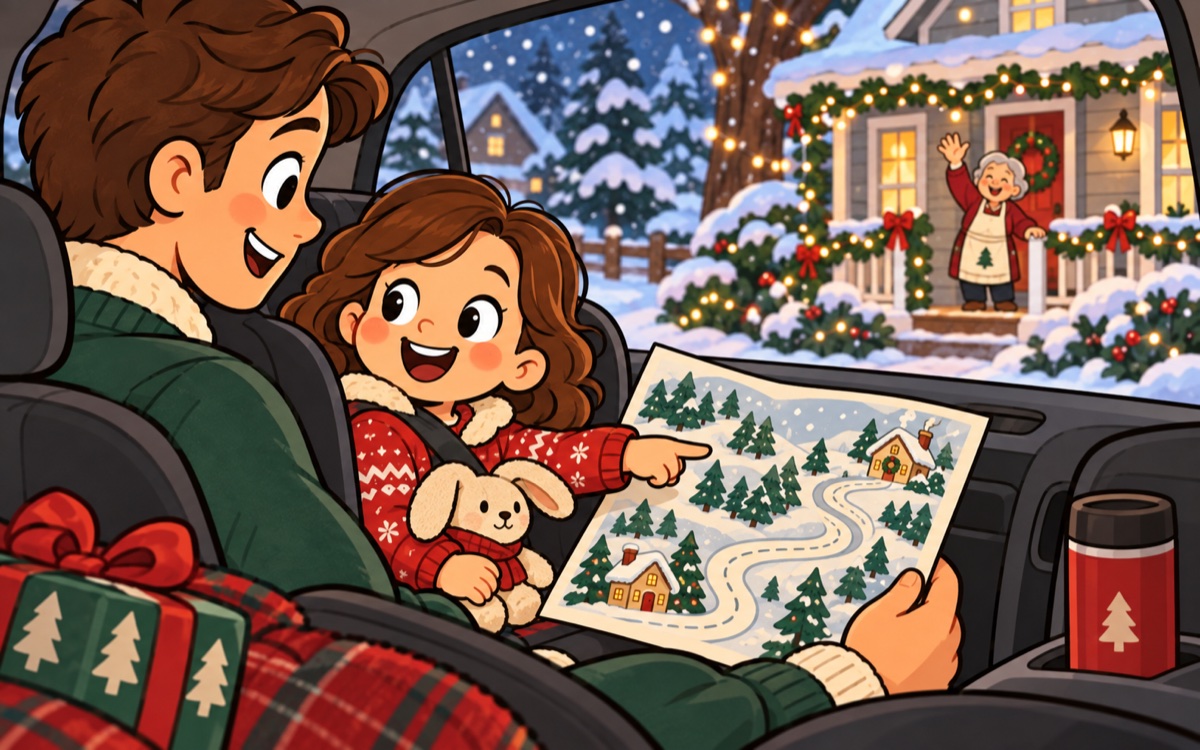
Find a familiar landmark
Point to a place you both know, such as the bridge on the way to Grandma’s. Ask what your child remembers: the ducks below it, the road after it or the house at the end. You can sketch the route if a detailed map is too much.
Follow the route together
Let your child describe what comes next. If they mix up the order, find the next landmark together instead of turning it into a geography test. One small journey can be enough; you do not need to compare many countries or keep a screen running.
Choose symbols for your drawing
If the conversation is part of a Christmas story, distinguish the real remembered journey from the fictional visitor’s route. “We crossed this bridge on Saturday. Our paper star is passing a bridge in the story.”
Let your child choose a symbol for one landmark: wavy lines for the river, a circle for the park or a picture of Grandma’s dog. Describe the route using those symbols. If you lose your way, return to the last familiar point. Take the drawing on your next visit and compare it with what you actually see.