Santa or le père Noël? Naming the Christmas visitor in Canada
English and French names can meet at school, on packaging and around the same family table.
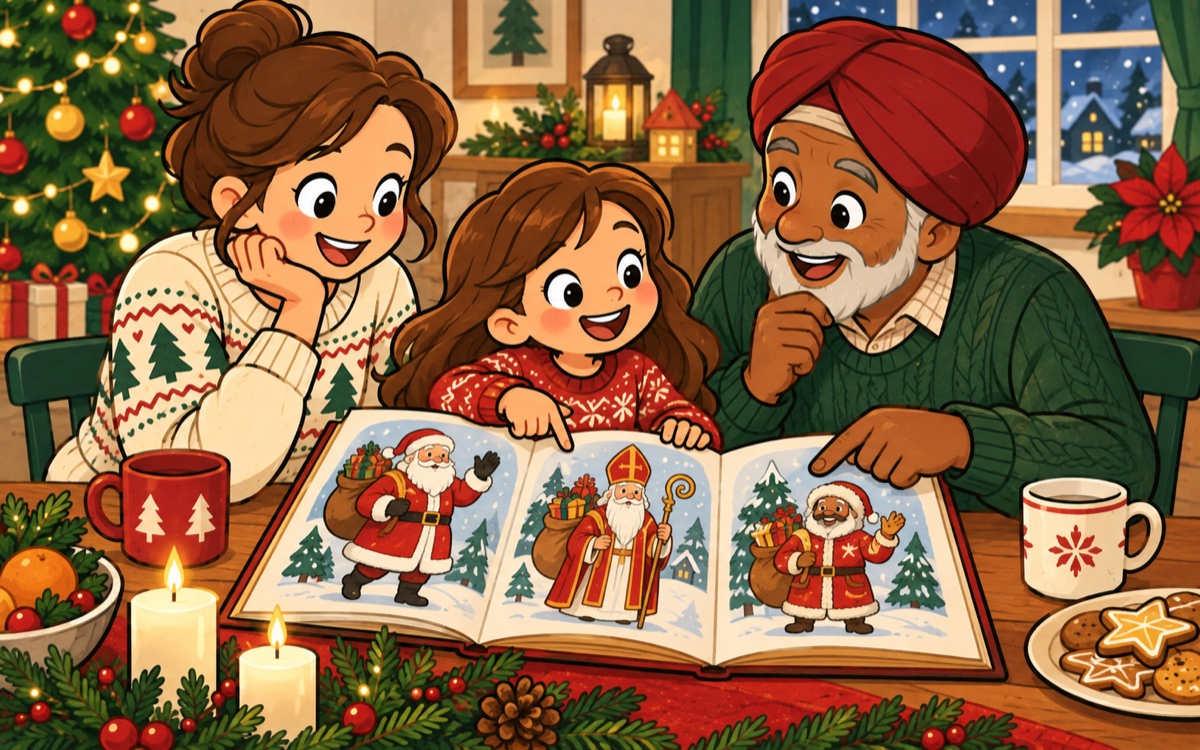
Your child might say Santa at school and le père Noël with a francophone grandparent. Ask the adults whether both words mean the same character in your household and when each person expects gifts. That small conversation prevents more confusion than a polished explanation to the child.
Use names that belong to your family
If you use both, put both in a note or switch naturally as you speak. If one relative has a separate custom, name it. There is no need to flatten every French- and English-speaking Canadian celebration into one timeline.
- Ask grandparents what they call the visitor.
- Settle whether gifts appear at the réveillon or in the morning.
- Keep your explanation short enough for a young child.
“Grand-maman says le père Noël. We say Santa. In our family those are two names for the same visitor.” Change the sentence if your family’s traditions are not identical.
Separate a name from the next family event
A familiar name does not tell a child when gifts appear. Add the practical part: “Grandma calls him Father Christmas. At her house we open presents after dinner.” Check that detail with Grandma before saying it.
If a cousin describes something different, you can say that households tell and celebrate the story in different ways. There is no need to correct the cousin or invent a rule that joins every character into one journey. For your child’s day, the useful answer is who they will visit and what will happen there.